Wales Rugby Concussion Case Enters 'Unprecedented Territory' - What Grassroots Clubs Must Know
The Welsh rugby concussion litigation is escalating in scale and legal complexity. Here is what community clubs and schools must take from it for their own duty of care.
Wales Rugby Concussion Case Enters 'Unprecedented Territory' - What Grassroots Clubs Must Know
Key takeaways
- Former Wales internationals have released statements as their concussion litigation is described as entering "unprecedented territory" in scale and legal complexity.
- The case is the latest in a wave of UK rugby concussion litigation that is reshaping how governing bodies, clubs and schools think about duty of care.
- Grassroots clubs and schools are not defendants in these cases, but the legal reasoning will directly influence what "reasonable care" looks like at community level.
- Documented concussion protocols are no longer optional best practice; they are the foundation of any credible duty of care defence.
- Now is the time to audit your concussion governance before external pressure forces you to.
A former Wales international has released a statement as the multi-million-pound concussion legal battle against rugby's governing bodies is described as entering "unprecedented territory" in its scale and complexity. The litigation, which involves former professional players citing long-term neurological harm from repeated head impacts during their careers, is growing and drawing attention from across the sport - including from people running community clubs and schools who are right to ask what it means for them.
This article is not about the legal case itself. It is about what the direction of travel in concussion litigation means for every club welfare officer, school Head of Sport, and bursar who has responsibility for concussion management in the UK today.
What is actually happening in the litigation?
The latest reporting from Planet Rugby describes the case as having reached an unprecedented scale and legal complexity. Former Wales players have joined, or are backing, the legal action against governing bodies, alleging that systemic failures in concussion management during their professional careers contributed to neurological damage.
This follows a pattern established by the broader English rugby concussion litigation, which has been building for several years and now involves hundreds of former players across multiple nations and competitions.
The precise legal arguments - negligence, breach of duty, knowledge of risk - are a matter for the courts and the lawyers. But the underlying logic is one every sports organisation should understand: if a governing body or club knew, or ought to have known, about the risks of repeated head impacts and failed to act proportionately, that failure has legal consequences.
Why grassroots clubs and schools should pay close attention
None of the defendants in the current litigation are community clubs or schools. These cases concern elite professional sport and the governing bodies responsible for it. But the way courts and regulators interpret "duty of care" in elite sport has a well-documented habit of filtering down to community level.
Three mechanisms make this relevant to you.
First, NGBs under litigation pressure update their community-level requirements. When the RFU faces scrutiny over what it knew and when, its response typically includes tightening what it requires of affiliated clubs and schools. Those requirements become compliance obligations.
Second, insurers watch litigation closely. An insurer who sees governing bodies found liable for failing to implement protocols will tighten their questions to clubs and schools at renewal. Some are already doing this. Documenting your concussion management is the single most effective thing you can do to maintain favourable insurance terms.
Third, the legal standard of "reasonable care" is not fixed. It is defined by what a responsible organisation in the same position ought to have done, given what was known at the time. As public knowledge of concussion risk grows - accelerated by cases like this one - the bar for what counts as reasonable rises accordingly.
What does "demonstrable duty of care" actually require?
The UK Concussion Guidelines for Grassroots Sport (Sport and Recreation Alliance, November 2024 update) set out the operational standard for community sport. For under-18s, they specify a minimum 21-day stand-down from contact sport after a confirmed or suspected concussion, a symptom-free period before return to activity, and a staged graduated return to play.
But having the guidelines is not the same as implementing them. The question that any insurer, NGB inspector, or plaintiff's solicitor will ask is not "did you have a policy?" - it is "what did you actually do, and how do you know?"
That means:
- A written concussion policy that names who is responsible for each step.
- A protocol that staff are trained to follow, with evidence of that training.
- An incident record for every suspected concussion, documenting the removal decision, who made it, and when.
- A staged return-to-play record showing each completed stage, who supervised it, and the date.
- Communication records with parents and, where relevant, the pupil's GP or school.
This is what an audit trail looks like. Without it, you have a policy on paper and a gap in evidence of practice - exactly the gap that litigation exploits.
What the Wales case adds to the picture
What makes the Wales case particularly significant is the description of its "scale and complexity." This suggests the litigation is not narrowing toward resolution but broadening. More players, more jurisdictions, more legal argument.
That sustained complexity matters for two reasons. First, it keeps concussion governance on the front pages for longer, which raises public and parental expectations of community sport. Second, it creates an extended period in which governing bodies are under pressure to demonstrate that they have done everything reasonable - which means they will pass that pressure down to affiliated organisations.
For schools, this connects directly to the Keeping Children Safe in Education (KCSIE) framework. KCSIE does not mention concussion by name, but its duty to safeguard pupils' physical welfare is broad enough to encompass head injury management. Ofsted inspectors and governors increasingly ask whether schools have written, operational concussion protocols - not because KCSIE mandates a specific document, but because the duty of care it establishes requires proportionate action on known risks.
The women's rugby parallel
Alongside the Wales litigation, this week also saw former Wales internationals backing a new women's rugby concussion study. This is significant. Research into concussion in women's rugby has historically lagged well behind the men's game, and the involvement of high-profile players in driving that research forward signals that the same governance questions about duty of care will apply to the women's and girls' game with increasing force.
Schools running girls' rugby programmes, and clubs running women's sections, should not assume that protocols designed primarily around the men's elite game are sufficient. The November 2024 UK Grassroots Concussion Guidelines apply across sexes and age groups, and the specific clinical picture for female athletes - including documented differences in symptom presentation and recovery - should be reflected in how staff are trained to identify and manage suspected concussion.
Practical steps for clubs and schools right now
This is not a call to panic. It is a call to audit. The litigation involving Wales and other professional players concerns decades of exposure at elite level under frameworks that were, by any current standard, inadequate. Community sport today has clearer guidelines than ever. The question is whether your organisation is implementing them and can prove it.
Here is a concrete starting point:
- Review your written policy. Does it reference the November 2024 UK Grassroots Guidelines? Does it specify minimum stand-down periods (21 days for under-18s)?
- Check your training records. Who on your staff has completed RFU HEADCASE or equivalent concussion awareness training? When was it last updated?
- Pull three recent incident records. For any suspected concussion in the last 12 months, is there a written record of removal, the return-to-play stages, and clinical clearance?
- Ask your insurer one question. Does your current policy require documented concussion protocols, and what does "documented" mean to them?
- Brief your governors or board. Concussion governance is now a board-level issue, not just a sports department one. The litigation trend makes that clear.
What to do next
The Wales concussion case, and the wider litigation landscape, will continue to develop. The practical response for community sport is not to follow each development in the courts but to build the internal systems that demonstrate proportionate, documented concussion management - now, before external pressure demands it.
The Luca Safe Concussion Framework gives schools and clubs the documented governance structure their NGB, insurer, or inspector is increasingly asking for.
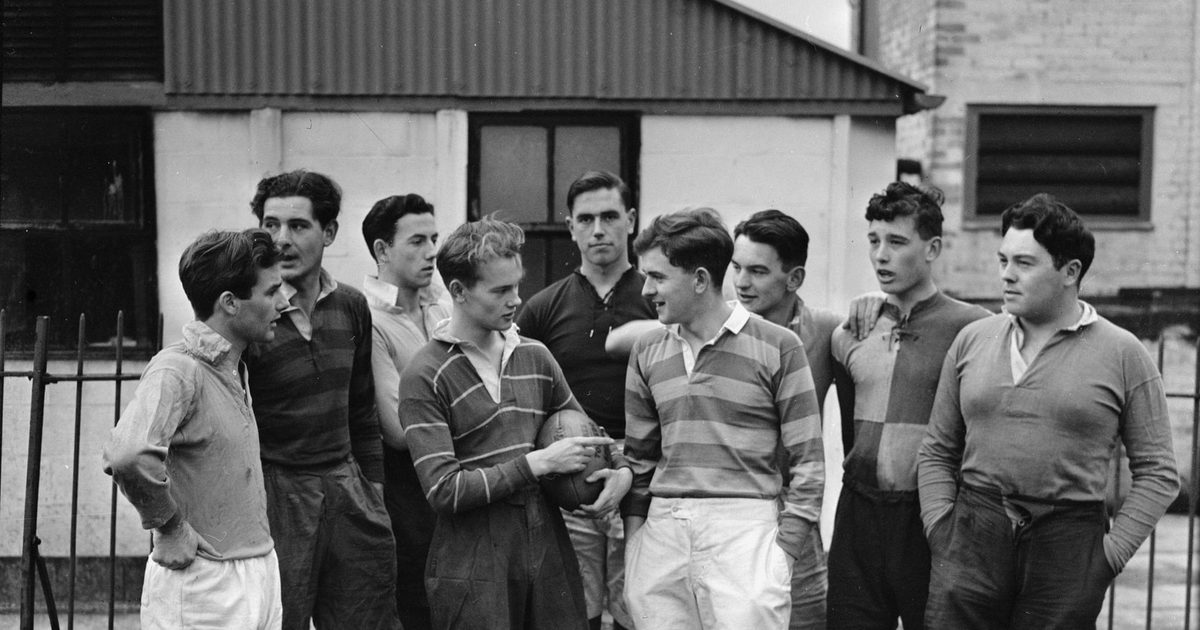
Photo: Geoff Charles, CC BY-SA 4.0 https://creativecommons.org/licenses/by-sa/4.0, via Wikimedia Commons.
Sources
- Planet Rugby. Former Wales star releases statement as 'scale and complexity' rises in multi-million-pound concussion legal battle. https://www.planetrugby.com
- NR Times. Former Wales internationals back women's rugby concussion study. https://www.nrtimes.co.uk
- Sport and Recreation Alliance. UK Concussion Guidelines for Grassroots Sport (November 2024 update). https://sportandrecreation.org.uk/files/uk-concussion-guidelines-for-grassroots-non-elite-sport---november-2024-update-061124084139.pdf
- Department for Education. Keeping Children Safe in Education (KCSIE) 2024. https://www.gov.uk/government/publications/keeping-children-safe-in-education--2
- BBC Sport. Rugby concussion litigation: what you need to know. https://www.bbc.co.uk/sport/rugby-union
The litigation landscape is shifting fast. If your club or school has not yet audited its concussion governance, the Luca Safe Concussion Framework is free to download and gives you a structured, seven-domain template to work from. See the full framework at /lscf/ and start your audit today.