Tom Curry Steps Down With Concussion - What It Means for Grassroots Rugby
England flanker Tom Curry has stepped down from rugby immediately due to concussion, at 26. Here is what his decision means for school and community rugby clubs.
Tom Curry Steps Down With Concussion - What It Means for Grassroots Rugby
Key takeaways
- Tom Curry, England flanker and Sale Sharks captain, has stepped down from rugby with immediate effect due to concussion at age 26.
- His decision follows a pattern of elite players retiring young because of head injury, raising questions about cumulative impact.
- Curry's exposure as a professional is categorically different from a school or community player's - but his story is a prompt, not a panic.
- The right response for clubs and schools is not to reconsider rugby's existence, but to tighten identification, management, and documentation.
- The UK Grassroots Concussion Guidelines (November 2024 update) and the Luca Safe Concussion Framework provide the operational tools to do exactly that.
Tom Curry, one of England's most decorated back-row forwards, has stepped down from rugby with immediate effect. The Sale Sharks captain and two-time British and Irish Lion cited concussion as the reason, according to reports from Ruck.co.uk. He is 26 years old.
It is a stark moment - not because a player retiring with concussion is now unusual in elite rugby, but because of Curry's age. He is at the peak of what should have been a decade-long international career. His decision will land in every school staffroom and every community club meeting room in the country, and coaches, welfare officers, and parents will ask the same question: what does this mean for us?
The honest answer is: quite a lot, but not what the headlines might suggest.
What we know about Tom Curry's decision
At the time of writing, the specific clinical details of Curry's situation have not been made public, and Luca will not speculate beyond what is confirmed. What the reports confirm is that he stepped down citing concussion, and that the decision was immediate and voluntary.
Curry has had a high-profile concussion history. He was stood down during the 2023 Rugby World Cup after sustaining a head injury, and the subsequent management of that injury attracted significant media attention. The pattern across his career appears to reflect the cumulative-impact concern that sits at the centre of current concussion science.
Why elite exposure is not the same as grassroots exposure
This distinction matters enormously, and conflating the two is the single biggest error schools and clubs can make when processing news like this.
A professional flanker like Curry encounters contact at a frequency, speed, and force that no school or community player approaches. The University of Glasgow FIELD study - which examined former Scottish professional footballers - demonstrated elevated neurological risk in players with long careers in elite sport. A separate stream of research on former professional rugby players points in the same direction. But in every case, the exposure profile studied is professional sport, not school first-XV rugby or community weekend fixtures.
The UK Concussion Guidelines for Grassroots Sport (Sport and Recreation Alliance, November 2024 update) are explicit that their framework applies to non-elite sport, and they are calibrated around the real contact volumes of community and school rugby - not professional training schedules. Applying the anxiety generated by elite retirements directly to a Year 10 school match is not proportionate, and it is not what the science supports.
That does not mean the science is irrelevant to grassroots. It means it needs to be read in context.
What Curry's retirement should prompt clubs and schools to do
The right response is not to reconsider rugby's place in school life. The right response is to examine whether your current concussion identification, management, and documentation actually meets the standard the guidelines require - and to fix it if it does not.
There are three immediate questions every Head of Sport, club welfare officer, and PE department should be asking:
1. Is every suspected concussion being identified and removed promptly?
The "if in doubt, sit them out" principle is the foundation. It is not a suggestion. The November 2024 UK Grassroots Guidelines make clear that any player with suspected concussion must be removed immediately and not return to play the same day - regardless of whether symptoms resolve. The pressure on young athletes to play through is real; the culture that enables it needs active dismantling.
2. Is the graduated return to play being followed correctly?
The minimum stand-down for under-18s under UK Grassroots Guidelines is 21 days before return to contact. Not 21 days from symptom resolution, but 21 days as a minimum from the initial injury. Many clubs are still operating on outdated "symptom-free for 48 hours" thinking, which the guidelines explicitly replaced. The graduated return to sport (GRAS) protocol sets out six stages, each with specific requirements, and each stage must be completed before progressing.
3. Is every concussion event being documented?
Documentation is not bureaucracy. It is the audit trail that protects the player, the school, and the club. A player who carries undisclosed cumulative concussion history into a subsequent season is at greater risk. An institution with no records cannot demonstrate that protocols were followed. Both problems are preventable.
The cultural parallel: why young athletes hide symptoms
One of the reasons elite retirements like Curry's are so striking is that they are the visible end of an iceberg. For every player who eventually stops playing because of accumulated injury, there are many more who played through symptoms they hid - at every level of the game, including school sport.
Research cited in the CISG 6th Consensus Statement (2023) confirms that symptom under-reporting is a systemic problem in contact sport, particularly among young male athletes, and particularly in team sports where selection pressure is high. A player who fears losing their place in the squad will not volunteer that their head hurts.
The implication for schools and clubs is not clinical - it is cultural. Concussion identification has to be the responsibility of trained adults on the sideline, not the reporting burden of the player themselves. The CRT6 (Concussion Recognition Tool 6, available from concussioninsportgroup.com) gives any non-medical coach or teacher a structured observational framework that does not rely on the player volunteering symptoms.
What this means for school rugby specifically
School sport is not professional sport. But it operates with some of the same cultural pressures - selection, representation, identity - and significantly less medical infrastructure. A professional like Curry has access to team doctors, neurologists, and neuropsychologists throughout his career. A Year 12 pupil playing county-level school rugby has their Head of Sport and whatever protocol the school has chosen to implement.
That gap is exactly why the November 2024 UK Grassroots Concussion Guidelines were developed, and why education programmes such as Luca's education programme exists for schools and community clubs. The tools are there. The question is whether schools are using them consistently.
The broader pattern: a sport taking its responsibilities seriously
Curry's retirement does not exist in isolation. It follows a period of significant change in rugby's approach to concussion, including the World Rugby recommendation (November 2025) that a lower tackle height be written into community game law, ongoing reform of HIA (Head Injury Assessment) protocols at elite level, and the emergence of litigation from former professional players.
The direction of travel is clear: rugby is being asked to reduce cumulative head impact at every level of the game, and the regulatory and legal pressure to demonstrate that management is rigorous will only increase. For community clubs and schools, the question is not whether to take concussion seriously - it is whether their current protocols are good enough to show they already do.
What to do next
If Tom Curry's retirement has prompted any doubt about your club's or school's current position, here is a practical first step: run through the seven domains of the Luca Safe Concussion Framework and identify where your protocols have gaps. That includes identification, immediate removal, graduated return, documentation, staff training, parent communication, and clinical oversight.
You do not need to be an elite club to meet a high standard. The standard is the same for a school first XV as it is for a Sale Sharks senior squad - and the tools to meet it are available.
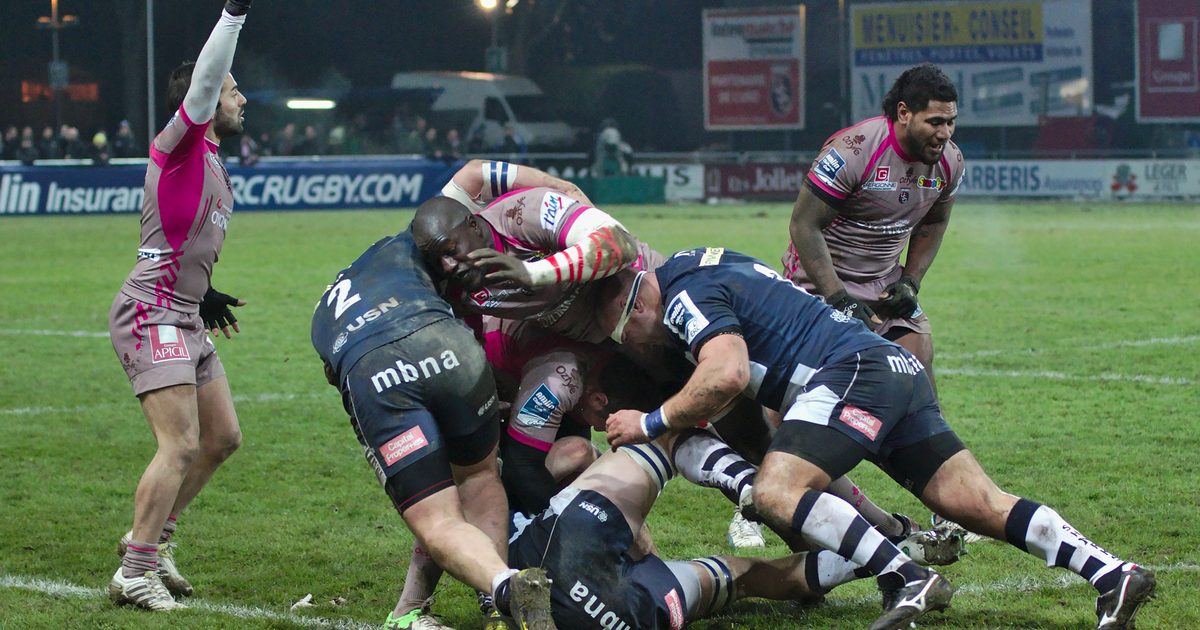
Photo: Clément Bucco-Lechat, CC BY-SA 3.0 https://creativecommons.org/licenses/by-sa/3.0, via Wikimedia Commons.
Sources
- Ruck.co.uk. Tom Curry steps down with immediate effect following concussion. https://www.ruck.co.uk/tom-curry-steps-down-with-immediate-effect-following-concussion/
- Sport and Recreation Alliance. UK Concussion Guidelines for Grassroots Sport (November 2024 update). https://sportandrecreation.org.uk/files/uk-concussion-guidelines-for-grassroots-non-elite-sport---november-2024-update-061124084139.pdf
- England Rugby. England provide update on Tom Curry (2023 World Cup). https://www.englandrugby.com/news/article/england-provide-update-on-tom-curry
- CISG 6th Consensus Statement on Concussion in Sport (2023). British Journal of Sports Medicine. https://bjsm.bmj.com/content/57/11/695
- Concussion in Sport Group. SCAT Tools including CRT6. https://concussioninsportgroup.com/scat-tools/
- World Rugby. World Rugby recommends lower tackle height be written into community game law (November 2025). https://www.world.rugby/news/939903/world-rugby-recommends-lower-tackle-height-be-written-into-community-game-law
- University of Glasgow / BMJ Open Sport. FIELD study: neurological risk in former professional footballers. https://bjsm.bmj.com/content/53/18/1176
Luca's framework for schools and community clubs covers every element of concussion management - from sideline identification to clinical clearance. If Tom Curry's retirement has prompted a review of your protocols, start with the Luca Safe Concussion Framework to benchmark where you stand.