A Springbok Retires After a 'Huge Fright' - What Grassroots Rugby Must Learn
When a professional Springbok centre retires citing a 'huge fright' from concussion, it raises questions every grassroots club and school rugby coach should be asking about player welfare and return-to-play decisions.
A Springbok Retires After a 'Huge Fright' - What Grassroots Rugby Must Learn
Key takeaways
- A Springbok centre has retired from professional rugby citing a serious concussion scare, described as a "huge fright."
- Elite players retiring on medical advice is a visible signal of a decision that grassroots clubs and schools rarely make as confidently.
- The "huge fright" framing reflects the reality that concussion is not always dramatic and obvious - delayed concern can follow an apparently minor incident.
- UK Grassroots Concussion Guidelines (November 2024 update) require removal, stand-down, and graduated return for any suspected concussion, regardless of severity perception at the time.
- Clubs and schools that document every head incident - not just the obvious ones - are in a stronger position if a player's situation changes weeks later.
The retirement of a Springbok centre after what he described publicly as a "huge fright" is one of the more quietly significant concussion stories of the 2026 rugby season. There were no dramatic on-pitch scenes, no ambulance - just a professional player, advised by medical staff, deciding that carrying on was not worth the risk. That decision, reached at the highest level of the game, contains lessons for every grassroots club welfare officer and school Head of Sport managing concussion in young players this season.
What actually happened - and why it matters
SA Rugby magazine reported that the player chose to step away from the professional game following a concussion that gave him, in his own words, a "huge fright." The detail matters: this was not described as a career-ending injury sustained in a single catastrophic collision. It was framed as a moment of clarity - a recognition that the cumulative or acute impact of a head injury had crossed a threshold where continuing was not the right call.
At elite level, players have access to team physicians, neuropsychologists, and the World Rugby Head Injury Assessment (HIA) protocol at every match. Even with all of that support in place, the outcome was retirement.
At grassroots level and in school sport, the resources look very different. There is rarely a pitchside medic. The coach may be the only adult making the call about whether a player comes off - and whether they return the following week.
Why the "huge fright" framing is instructive for coaches
The phrase "huge fright" is worth sitting with. It suggests a delayed or progressive concern rather than immediate incapacity. This is one of the most important - and most commonly misunderstood - features of concussion: the signs are not always immediate, and the seriousness of an incident is not always apparent at the moment it occurs.
The UK Concussion Guidelines for Grassroots Sport (Sport and Recreation Alliance, November 2024 update) are explicit on this point. Removal from play should happen on suspicion, not confirmed diagnosis. The "if in doubt, sit them out" principle exists precisely because coaches cannot be expected to make clinical judgements in real time. If there is any doubt - a wobble, a vacant look, a complaint of a headache later in the changing room - the player does not return.
What follows is not a coach's decision alone. The November 2024 guidelines require a minimum 21-day stand-down from contact sport for under-18s before graduated return to play can begin, and a 14-day symptom-free period before that process starts. For adults, the minimum stand-down is 21 days from the date of injury. These are floors, not targets.
For a deeper look at how the graduated return to play (GRTP) protocol works in practice, the Luca Safe Concussion Framework sets out each stage with the clinical rationale behind it.
What elite retirement decisions reveal about grassroots risk
When a professional player retires on medical advice, the chain of events behind that decision typically includes multiple clinical assessments, neuroimaging, neuropsychological testing, and specialist consultation. The player is making an informed decision with full medical backing.
At community club and school level, the equivalent decision is often made with far less information - by the player themselves, their parent, or a coach. The structural pressure to return is different too. A professional player's livelihood is at stake if they carry on and sustain further injury; a teenage rugby player faces peer pressure, selection anxiety, and a coach who may not be equipped to hold the line.
The RFU HEADCASE programme (available at englandrugby.com) provides online concussion education for coaches, referees, and club staff in England. Completing HEADCASE is a baseline; it gives coaches the language and the confidence to make the removal decision and to hold it against pushback. But education alone does not create a documented trail of what happened, when, and what was done in response.
How grassroots clubs should respond to a "huge fright" incident
The Springbok case is a reminder that some concussion events do not resolve quickly or cleanly. A player who seems fine on the pitch may become concerned in the days that follow. That possibility is not a reason for alarm - it is a reason for structured follow-up.
Here is what the November 2024 UK Grassroots Guidelines require, and what good practice looks like beyond the minimum:
Immediate removal. Any suspected concussion means the player comes off and does not return that day. No exceptions.
A record is made at the time. Who was involved, what was observed, what was said, what happened next. This is not bureaucracy - it is the foundation of safe management and, if the situation develops, the evidence of what took place.
The player is not left to self-monitor. Follow-up contact within 24 hours, from the club or school welfare lead to the player or, for under-18s, their parent or guardian.
Graduated return to play is not assumed to be automatic. If a player reports worsening symptoms, new symptoms, or a "huge fright" equivalent in the days after an incident, the clock resets. Clinical re-assessment - through the player's GP or, if symptoms are significant, NHS 111 - is the appropriate next step. Luca's how it works page explains how the clinical pathway supports this.
Documentation continues through the return. A player who passes each stage of the graduated return protocol, with that progress recorded, is in a fundamentally safer position than one who is informally cleared by a coach who saw them at training and thought they looked fine.
The culture question
The Springbok's decision to retire carries weight partly because professional sport still has a culture in which playing through injury is normalised - and a player choosing not to is noticeable. At grassroots level, that culture is often stronger, not weaker. Young players do not want to let the team down. Coaches feel pressure from parents and from the fixture list.
Good concussion management is partly a documentation task, but it is also a culture task. The clubs and schools that do this well have typically made the removal and stand-down decision visible and non-negotiable - not something the coach quietly decides depending on the score or the importance of the match. The November 2024 guidelines support that culture by making the protocol clear: it is not the coach's call whether to apply it.
What schools and clubs should do now
- Check that your concussion policy covers the full pathway, not just initial removal. The guidance changed in November 2024; if your policy predates that update, it needs reviewing.
- Ensure every adult who manages players at training and fixtures has completed HEADCASE (for rugby clubs) or the equivalent for their sport, and knows what to do when they suspect a concussion.
- Confirm that your documentation process captures every suspected incident, including those that seem minor at the time. A "huge fright" that emerges two weeks later needs a paper trail.
- Know your escalation pathway. If a player's symptoms worsen or a player or parent expresses serious concern after an incident, who makes the call and where does it go? For under-18s, this should include GP contact.
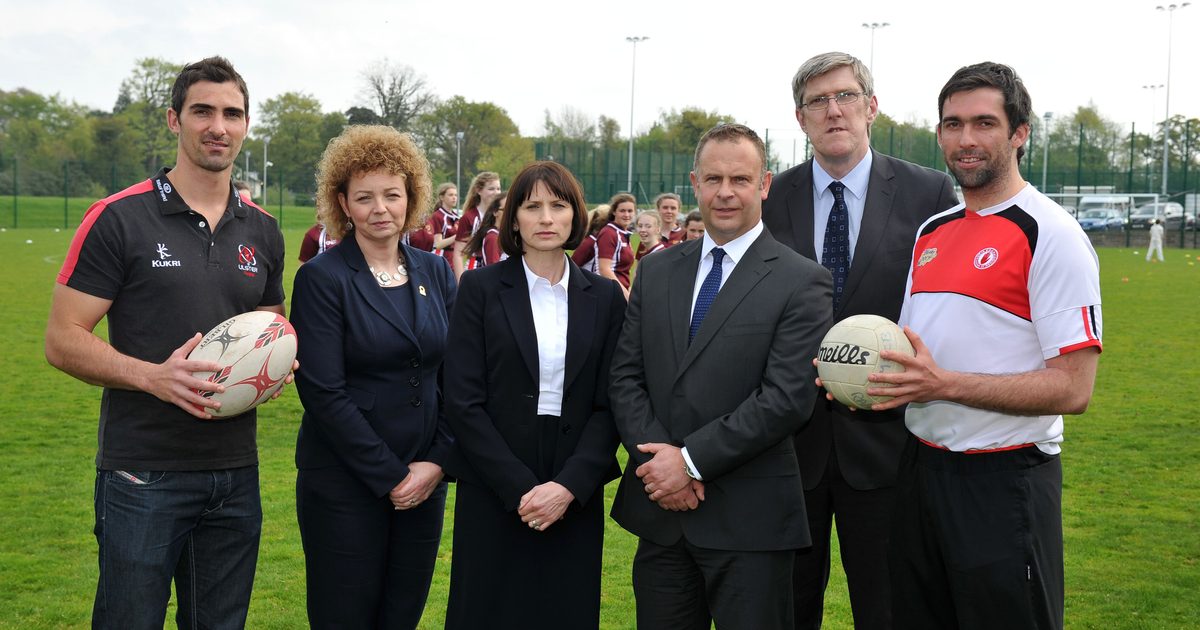
Photo: Northern Ireland Executive, CC BY 2.0 https://creativecommons.org/licenses/by/2.0, via Wikimedia Commons.
Sources
- SA Rugby Magazine. Bok centre retires after 'huge fright'. https://www.sarugbymag.co.za
- Sport and Recreation Alliance. UK Concussion Guidelines for Grassroots Sport (November 2024 update). https://sportandrecreation.org.uk/files/uk-concussion-guidelines-for-grassroots-non-elite-sport---november-2024-update-061124084139.pdf
- England Rugby. HEADCASE concussion programme. https://www.englandrugby.com/run/player-welfare/headcase
- World Rugby. Concussion guidance and HIA protocol. https://www.world.rugby/the-game/player-welfare/concussion
If your club or school is reviewing its concussion management approach this season, the Luca Safe Concussion Framework provides a complete, clinician-led structure for every stage of management - from sideline removal to graduated return to play - aligned with the November 2024 UK Grassroots Concussion Guidelines. It is free to download and built for the realities of community and school sport.