What Is Second Impact Syndrome? A Plain-English Guide for Coaches and Parents
Second impact syndrome is rare but catastrophic - and entirely preventable. Here is what coaches, parents and school staff need to understand about the science and the protocols that protect young athletes.
What Is Second Impact Syndrome? A Plain-English Guide for Coaches and Parents
Key takeaways
- Second impact syndrome (SIS) occurs when a second head injury happens before the brain has recovered from a first concussion.
- Fewer than 20 cases have been documented in the peer-reviewed literature globally, making SIS genuinely rare.
- When it does occur, the consequences are catastrophic: rapid brain swelling, permanent disability, or death.
- Young athletes, particularly adolescents, are considered more vulnerable than adults.
- Every return-to-play protocol exists, in part, because SIS is preventable if concussion is managed correctly.
The term "second impact syndrome" gets used a lot in concussion education. It is also, occasionally, misused as a scare tactic that overstates the statistical risk. This article takes the honest middle ground: SIS is rare, it is serious, and understanding it properly is the best argument there is for following graduated return-to-play protocols to the letter.
SIS in one paragraph
Second impact syndrome is a condition in which a second concussive or sub-concussive blow to the head, sustained while the brain is still recovering from a first injury, triggers sudden, catastrophic swelling of the brain. Unlike a straightforward concussion, which the brain can recover from given time, SIS causes a loss of autoregulation: the brain's blood vessels dilate uncontrollably, pressure builds inside the skull, and herniation can follow within minutes. The outcome, when SIS occurs, is almost uniformly severe.
The science: what happens in the brain
After a concussion, the brain enters a period of metabolic vulnerability. The CISG 6th Consensus Statement (2023) describes this as a period during which the brain's demand for energy outstrips its supply - a neurometabolic crisis. Ionic imbalances, mitochondrial disruption, and changes in cerebral blood flow all occur beneath the surface, often while the athlete feels symptom-free.
If a second impact arrives during this window, the disrupted autoregulatory systems cannot compensate. The result is diffuse cerebral swelling, which progresses rapidly and is extremely difficult to reverse once it begins. The mechanism is distinct from the swelling that can follow a severe single impact.
The key clinical point: the second impact does not have to be severe. Even a relatively minor blow, one that would ordinarily cause no lasting harm, can trigger SIS in a brain that is already in this vulnerable state.
How rare is SIS, honestly
This is where the honest framing matters. The medical literature contains fewer than 20 well-documented cases of SIS globally, with most described in American case series from the 1990s and 2000s. Subsequent reviews have questioned whether some cases attributed to SIS were, in fact, something else entirely.
The UK Concussion Guidelines for Grassroots Sport (Sport and Recreation Alliance, November 2024 update) acknowledge SIS as a rationale for minimum stand-down periods without overstating its frequency. The CISG 6th Consensus Statement takes the same measured approach.
So: SIS is not a common outcome of playing sport with a concussion. What it is, when it happens, is catastrophic and largely irreversible. The rarity is real; the seriousness is equally real.
Why young athletes are particularly vulnerable
All the documented SIS cases in the literature involve athletes under 20, almost exclusively adolescent males. This is not coincidence. The CISG 6th Consensus Statement identifies the developing brain as more susceptible to prolonged metabolic disruption after concussion. Autoregulatory mechanisms in adolescent brains are less mature than in adults, which may explain why the catastrophic swelling seen in SIS appears to be an overwhelmingly paediatric phenomenon.
This is one of the reasons the November 2024 UK Grassroots Concussion Guidelines prescribe a minimum 21-day stand-down from contact for under-18s, compared to a 14-day minimum for adults. The under-18 threshold is not bureaucratic caution; it reflects the biological reality of the adolescent brain.
How protocols protect against SIS
The logic is straightforward: SIS cannot occur if the athlete does not suffer a second impact while their brain is still recovering. Graduated return-to-play (GRTP) protocols are designed to ensure exactly that.
The UK Grassroots GRAS protocol works in stages, moving the athlete from rest, through non-contact aerobic activity, through sport-specific skills, and finally back to contact only once they have been symptom-free for the minimum required period and have progressed through each earlier stage without symptom recurrence. At no stage does the athlete return to contact training or competition while the neurometabolic recovery window is still open.
Luca's clinician-led platform structures each stage of the graduated return-to-play pathway with documented oversight, reducing the risk of premature return from individual misjudgement or external pressure.
The honest case for following protocols even when they feel excessive
Coaches and players sometimes find the minimum stand-down periods frustrating, particularly when the athlete looks and feels completely well. This is understandable. The frustration misses something important.
The reason symptoms resolve before the brain has fully recovered is biological, not a sign that the guidelines are too cautious. The CISG notes that symptom resolution typically precedes full metabolic recovery by several days, sometimes longer in younger athletes. "Feeling fine" is a real and common state that nonetheless corresponds to ongoing neurological vulnerability.
The argument for strict protocols is not that every returning athlete will develop SIS. It is an asymmetric-risk argument: the cost of following the protocol correctly, even when it turns out the athlete would have been fine, is lost training and playing time. The cost of returning too early, in the rare case where SIS occurs, is permanent injury or death. No sensible risk framework concludes that the second outcome is worth the shortcut.
Practical steps for coaches and school staff
- Follow the minimum stand-down. For under-18s, this is 21 days from the date of concussion before return to contact. This is a floor, not a target; athletes who are still symptomatic at 21 days do not return.
- Do not let symptoms be the only guide. An athlete who is symptom-free at day five has not necessarily recovered. The protocol stands regardless.
- Document every stage. A written record of each GRTP stage protects the athlete and the school or club if questions are raised later.
- Remove and do not return on the same day. Any athlete suspected of concussion must not return to the same session, game, or training day. This is one of the clearest recommendations in the November 2024 UK Grassroots Guidelines.
- Escalate any concern. If an athlete develops severe or worsening symptoms after a head impact (persistent headache, repeated vomiting, one pupil larger than the other, loss of consciousness), treat it as a medical emergency and call 999.
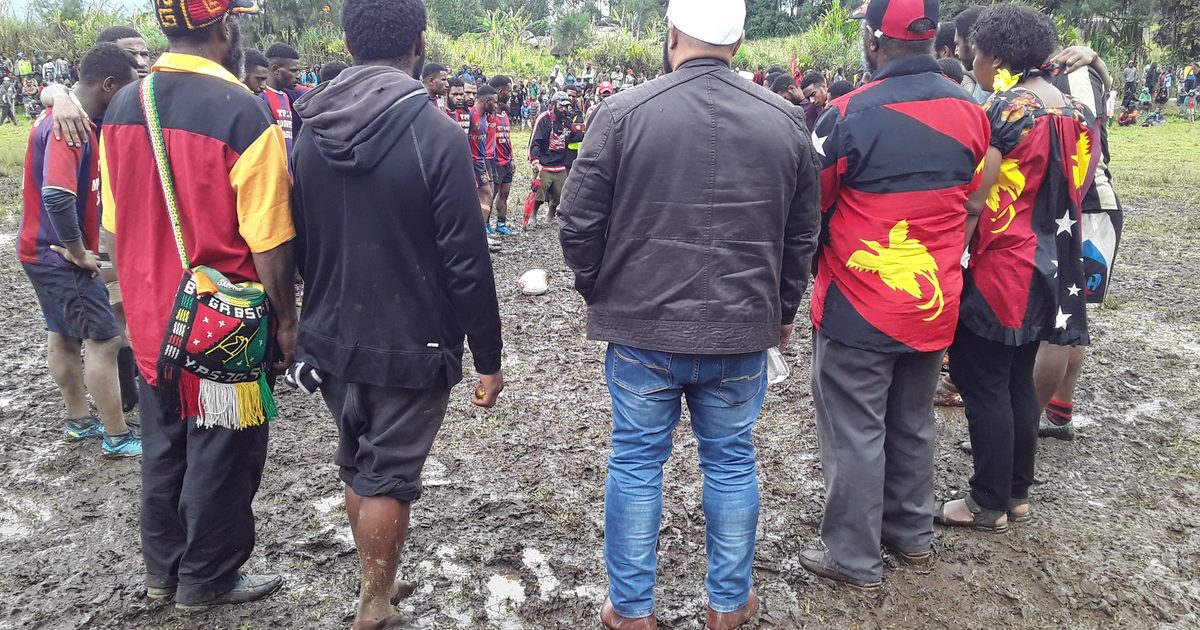
Photo: Augustine Brian, CC BY-SA 4.0 https://creativecommons.org/licenses/by-sa/4.0, via Wikimedia Commons.
Sources
- Cantu RC. Second-impact syndrome. Clinics in Sports Medicine, 1998. https://pubmed.ncbi.nlm.nih.gov/9220058/
- Patricios JS et al. Consensus statement on concussion in sport: the 6th International Conference on Concussion in Sport, Amsterdam, October 2022. British Journal of Sports Medicine, 2023. https://bjsm.bmj.com/content/57/11/695
- Sport and Recreation Alliance. UK Concussion Guidelines for Grassroots Sport (November 2024 update). https://sportandrecreation.org.uk/files/uk-concussion-guidelines-for-grassroots-non-elite-sport---november-2024-update-061124084139.pdf
Strict return-to-play protocols protect against rare but catastrophic outcomes. Luca's clinician-led platform structures every stage of the graduated pathway with documentation and oversight, so coaches and school staff can manage the process confidently. See how it works at /how-it-works/.