The Rugby Concussion Lawsuit - What Grassroots Clubs Need to Know
A landmark rugby concussion lawsuit is facing procedural pressure. Here is what the case involves and what it means for grassroots clubs and schools.
The Rugby Concussion Lawsuit - What Grassroots Clubs Need to Know
Key takeaways
- A major group litigation by former professional rugby players against governing bodies is facing procedural uncertainty after defendants pushed for a filing deadline that many claimants may struggle to meet.
- The case involves allegations that rugby authorities failed to protect players from the long-term neurological consequences of repeated head impacts.
- The litigation concerns elite professional careers, not grassroots or school rugby, but the duty-of-care questions it raises are directly relevant to community clubs and schools.
- How litigation unfolds does not reduce the obligation on clubs and schools to manage concussion to current guideline standards.
- Documented concussion protocols remain the clearest evidence that an organisation takes its duty of care seriously, regardless of how litigation unfolds.
The BBC and The Telegraph both reported this week that a long-running group action by former professional rugby players is facing significant procedural pressure. The defendants, which include World Rugby and the home unions, have pushed for a procedural deadline that a significant number of claimants may struggle to meet. The case has been running for several years and centres on claims that governing bodies knew about the long-term neurological risks of repeated head impacts and failed to act quickly enough to protect players. For grassroots clubs, school sports departments, and welfare officers watching from the sidelines, it raises an obvious question: what does any of this mean for us?
What the litigation is actually about
The group action was brought by a cohort of former professional rugby union players, many of whom report serious neurological symptoms in retirement. Their legal teams allege that governing bodies, including the RFU, World Rugby and the Welsh Rugby Union, were aware of the emerging science linking repeated head impacts to long-term brain conditions and did not implement protective measures quickly enough.
It is important to be clear about the nature of the claims. The case involves elite professional players who accumulated high-volume head impacts across long careers at the top level of the sport. We are not talking about school first XVs or community club players turning out on a Saturday afternoon.
The BBC reported that claimant solicitors have described the deadline requirement pushed by the defendant governing bodies as obstructive. As of the date of publication, no judgment has been reached and the case has not settled. Nothing in this article should be read as a legal characterisation of the merits of either side's position.
What CTE means in this context
Chronic traumatic encephalopathy (CTE) is a neurodegenerative condition associated with repeated traumatic brain injury. It is a post-mortem diagnosis - it can only be confirmed after death, through examination of brain tissue. No living person can be diagnosed with CTE on current evidence. When reading coverage of litigation or research in this area, that distinction matters enormously.
Research from the University of Glasgow, published in 2023 in BMJ Open Sport and Exercise Medicine, found that former professional rugby union players had a significantly elevated risk of neurodegenerative disease compared with matched controls. That is a serious finding. It is also a finding about professional players with long elite careers, not about children or community sport participants.
The FIELD study, led by researchers at the University of Glasgow and published in The New England Journal of Medicine, found elevated rates of neurodegenerative disease in former professional footballers. Again, the study population was professional players, not recreational participants.
Neither study tells us directly what the risk is for a pupil playing school rugby or a club player competing at Level 6. The exposure volumes are simply not comparable.
Why the litigation outcome does not reduce your duty of care
However the case develops, the duty of care that clubs and schools owe to participants does not change. Duty of care in sport is grounded in common law, reinforced by the Health and Safety at Work etc. Act 1974, and - for schools - by the safeguarding obligations in Keeping Children Safe in Education (KCSIE). None of those frameworks depend on litigation outcomes.
What the litigation does do, every time it makes headlines, is sharpen the attention of governors, insurers, and inspectors on whether organisations have done the basics. That is not a threat; it is an opportunity to demonstrate that your club or school is operating to current standards.
The UK Concussion Guidelines for Grassroots Sport (Sport and Recreation Alliance, November 2024 update) set out exactly what community sport must do: remove any player with a suspected concussion, apply a minimum 21-day stand-down for under-18s before return to contact, and follow a structured graduated return-to-sport pathway. These are not optional guidelines and they do not require a court to tell you to follow them.
What grassroots clubs should be doing right now
The litigation context is useful primarily as a prompt to audit. Three practical questions every club welfare officer and school Head of Sport should be able to answer:
1. Do we have a written concussion protocol that reflects the November 2024 UK Grassroots Guidelines?
Not a policy from 2019. Not something adapted from a Premier League club's framework. A document aligned to the current community sport guidelines, reviewed by someone who has read them.
2. Do we have an audit trail for every concussion event in the last two seasons?
This means a record of when the incident happened, who observed it, when the player was removed, what the graduated return pathway looked like, and who cleared the player for return to contact. If you cannot reconstruct that sequence for a specific player from twelve months ago, your documentation is insufficient.
3. Have the people responsible for implementing the protocol actually been trained on it?
A policy in a drawer is not evidence of a managed process. Coaches, PE teachers, and welfare officers need to know the signs of suspected concussion, how to apply the CRT6 recognition tool, and what happens next. The RFU's HEADCASE programme provides free online training for community rugby. It is a good starting point, not a complete framework.
The exposure difference matters - but does not mean ignoring the evidence
One response to the litigation coverage is to dismiss it entirely on the grounds that professional players are nothing like community participants. That would be a mistake. The science on repeated head impacts is real and it is developing. What it currently supports is proportionate risk management, not panic.
World Rugby's concussion guidance emphasises that the goal of protocols is to protect the brain during the vulnerable recovery window after a concussion, when a second impact carries disproportionate risk. That principle applies whether a player has had five career concussions or fifty. The minimum stand-down exists because the brain needs time to recover, not because every community player is on a trajectory toward neurodegeneration.
The honest case for rigorous grassroots concussion management is not that community players face the same long-term risks as professional players who trained full-time for fifteen years. It is that every concussion deserves proper management on its own terms, and that the protocols designed to protect participants are not burdensome. They are manageable, they are evidence-based, and they are increasingly what governing bodies, inspectors and insurers expect to see documented.
What to do next
If the litigation headlines have prompted any doubt about whether your current approach is sufficient, the right response is a structured self-audit, not a Google search. The Luca Safe Concussion Framework sets out a seven-domain structure that gives clubs and schools a clear picture of where their current provision stands and what needs to be addressed. It is the kind of documented, evidence-referenced framework that demonstrates genuine compliance, not box-ticking.
The legal case will run its course. Your duty of care does not wait for the verdict.
Sources
- BBC Sport. Brain injury legal action could collapse as rugby authorities push for deadline. https://www.bbc.co.uk/sport/rugby-union
- Sport and Recreation Alliance. UK Concussion Guidelines for Grassroots Sport (November 2024 update). https://sportandrecreation.org.uk/files/uk-concussion-guidelines-for-grassroots-non-elite-sport---november-2024-update-061124084139.pdf
- Mackay DF et al. Neurodegenerative disease mortality among former professional rugby union players. BMJ Open Sport and Exercise Medicine, 2023. https://bmjopensem.bmj.com/content/9/1/e001572
- Mackay DF et al. Neurodegenerative Disease and Death Among Retired Elite Soccer Players. New England Journal of Medicine, 2019. https://www.nejm.org/doi/full/10.1056/NEJMoa1908483
- World Rugby. Concussion guidance and protocols. https://www.world.rugby/the-game/player-welfare/concussion
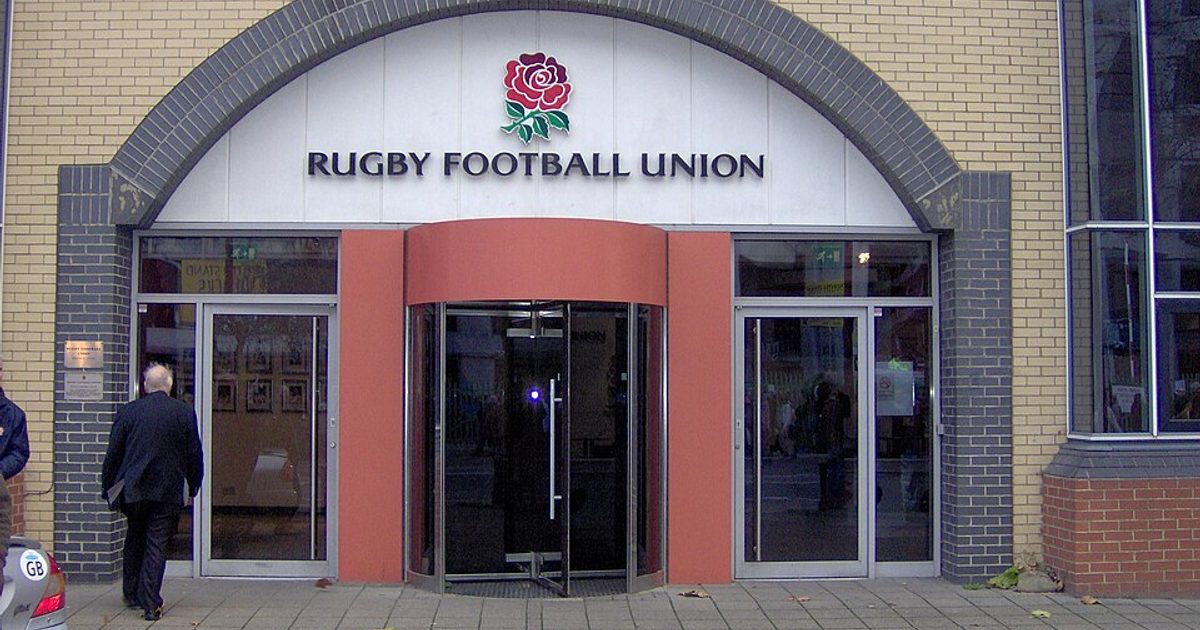
- England Rugby. HEADCASE concussion awareness programme. https://www.englandrugby.com/participation/playing/headcase Photo: rileyroxx, CC BY 2.0 https://creativecommons.org/licenses/by/2.0, via Wikimedia Commons
The Luca Safe Concussion Framework translates the UK Grassroots Guidelines into a documented, operational standard any club or school can implement. Whether you are reviewing your governance in light of the current litigation news or building a protocol from scratch, the framework gives you the structure to demonstrate that your organisation takes concussion management seriously. Download it free at /lscf/.