A New On-Pitch Concussion Protocol for Football - What Grassroots Clubs and Schools Must Know
An international consensus group has recommended a new football-specific on-pitch concussion assessment protocol. Here is what it means for UK grassroots clubs and schools.
A New On-Pitch Concussion Protocol for Football - What Grassroots Clubs and Schools Must Know
Key takeaways
- An international consensus group has recommended a new football-specific on-pitch concussion assessment protocol, published in mid-2026.
- The protocol is designed for trained medical personnel at organised matches, not as a replacement for the non-medical CRT6 tool used at grassroots level.
- The UK Concussion Guidelines for Grassroots Sport (Sport and Recreation Alliance, November 2024 update) remain the primary framework for community football and school sport.
- Schools and clubs must not conflate elite assessment tools with their own duty of care obligations under grassroots guidelines.
- The "if in doubt, sit them out" principle still applies the moment any concern arises, regardless of which protocol a competition uses.
A new football-specific on-pitch concussion assessment protocol has been recommended by an international consensus group, according to reporting from Mirage News and Bioengineer.org. The recommendation reflects years of criticism that football's previous approach - adapted from rugby's Head Injury Assessment (HIA) process - did not suit football's specific match conditions, substitution rules, and injury patterns.
For UK grassroots clubs and schools, the development matters. But understanding what it does and does not change is essential before anything else.
What has actually been recommended?
The international consensus panel has proposed a football-specific assessment tool intended for use by qualified medical personnel during organised matches. The protocol is tailored to the realities of football: different substitution rules compared to rugby, a high-speed game where a player may be assessed on the touchline within minutes of a head impact, and a sport where the clinical picture can be complicated by the physical demands of running at match intensity.
The new protocol is designed to improve the accuracy and speed of clinical decision-making at the point of injury, in settings where a trained medic is present.
It is not a tool for coaches, teachers, or parents. It is not a grassroots protocol. And it does not replace the CRT6 (Concussion Recognition Tool 6), which remains the appropriate first-response instrument for non-medical staff at community and school level.
Why does football need its own protocol?
Football's concussion management has attracted sustained criticism, most visibly around the 2022 and 2026 World Cups and throughout the professional game in England. Critics, including the Drake Foundation and the Jeff Astle Foundation, have argued that football's governing bodies have been slower to act than rugby union, despite growing evidence about heading, sub-concussive impacts, and neurological risk in former professional players.
The football-specific protocol responds to two genuine structural problems with applying rugby-derived tools in football:
-
Substitution rules differ. In rugby union's elite HIA system, a player can be temporarily removed and a replacement used while the assessment takes place. Football's permanent substitution rules make this process more complex and have historically created pressure to keep players on the pitch rather than remove them for assessment.
-
Assessment conditions differ. The physical demands and injury mechanisms in football require a protocol calibrated to football's specific movement patterns and neurological demands during exertion.
The consensus group's work attempts to resolve these structural mismatches with a tool designed from the ground up for football.
What do UK grassroots guidelines say right now?
The UK Concussion Guidelines for Grassroots Sport (Sport and Recreation Alliance, November 2024 update) apply to community football in England, Scotland, Wales, and Northern Ireland. These guidelines apply regardless of what protocols are used at professional or elite international level.
The key requirements for a grassroots football club or school remain:
- Any player with a suspected concussion is removed from play immediately. There is no return to play on the same day.
- For players under 18, a minimum 21-day stand-down from contact or competitive activity applies before return to full training or match play.
- For adults, a minimum 14-day stand-down is required.
- The CRT6 is the appropriate recognition tool for non-medical staff.
- Medical clearance is required before return to full participation.
These rules have not changed as a result of the new international consensus recommendation. The consensus panel's work is targeted at elite and organised match-day settings with qualified medical staff present - a very different environment from a Sunday league pitch or a school football fixture.
What does the consensus recommendation mean for schools?
For a school football coordinator or a PE teacher running fixtures, the honest answer is: very little changes operationally, but the direction of travel matters.
The growing body of football-specific concussion science - from the University of Glasgow's FIELD study on former professional players and dementia risk, to the FA's continuing rollout of heading restrictions in youth football - points consistently in one direction. Football is taking concussion more seriously, and the tools available to manage it are becoming more precise.
For schools, the implications are:
- Heading restrictions still apply in youth football. The FA's phased ban on heading in training for under-11s remains in force, with progressive restrictions extending into older age groups. This is unaffected by the new protocol.
- The CRT6 remains the right tool for school staff. Trained teachers and coaches use the CRT6 as a recognition tool, not a diagnostic one. They remove players with suspected concussion and refer for clinical assessment. That process does not change.
- Documentation still matters. Every concussion incident, suspected or confirmed, should be recorded. The new consensus protocol strengthens the case for thorough documentation at every level of the game.
For schools looking to align their football concussion management with current best practice, Luca's concussion management resources for schools set out the framework that maps directly to UK grassroots requirements.
Why does conflating elite and grassroots protocols cause problems?
This is a persistent issue in grassroots and school sport, and worth addressing directly.
When professional football or rugby adopts a new protocol, coaches, parents, and school sports staff often assume it sets the standard they must follow. In practice, elite protocols are designed for environments with pitch-side medics, video replay systems, and substitution rules that allow temporary removal. Community sport has none of these.
Grassroots protocols, including the UK Concussion Guidelines for Grassroots Sport, are built around the reality of community sport: a coach with a first aid certificate, no medic on the touchline, no video replay, and players who may be managing other commitments alongside their sport. The standard is "if in doubt, sit them out" - because the tools and expertise to do anything more sophisticated are not reliably present.
The new football-specific protocol does not lower the grassroots bar. It raises the elite standard to better match football's specific conditions. These are different things, and conflating them creates dangerous confusion about what is expected of coaches and teachers managing a school fixture.
What the sub-concussive evidence is adding to this picture
Alongside the new protocol recommendation, a separate strand of evidence continues to build around sub-concussive impacts in football. The Conversation reported this week on growing research suggesting that repeated low-level head impacts - below the threshold of a diagnosable concussion - may carry meaningful neurological risk over time.
This is distinct from the acute concussion management question. Sub-concussive impacts are not addressed by any return-to-play protocol, because by definition they do not produce symptoms that trigger removal. The FA's heading restrictions in youth football are partly a response to this evidence, reducing cumulative exposure rather than managing discrete concussion events.
For schools, the practical implication is that concussion management and heading restrictions are complementary rather than competing concerns. Both deserve serious, documented attention.
Practical steps for schools and clubs right now
-
Confirm your primary framework. The UK Concussion Guidelines for Grassroots Sport (November 2024 update) are the governing document for community and school football. Ensure your concussion policy references them explicitly.
-
Check your recognition tool. School sports staff should be familiar with the CRT6, available free from the Concussion in Sport Group website. It is designed for use by non-medical staff.
-
Review your heading restrictions compliance. The FA's current restrictions for under-11s in training apply across school football. Confirm that your coaching staff are aware and compliant.
-
Document every incident. Whether or not a concussion is confirmed, any head impact that prompts concern should be recorded. The record should include the mechanism, the response, and the outcome.
-
Ensure your return-to-play sign-off process is clear. For under-18s, the 21-day minimum stand-down and medical clearance requirement must be built into your protocol, not left to informal decision-making.
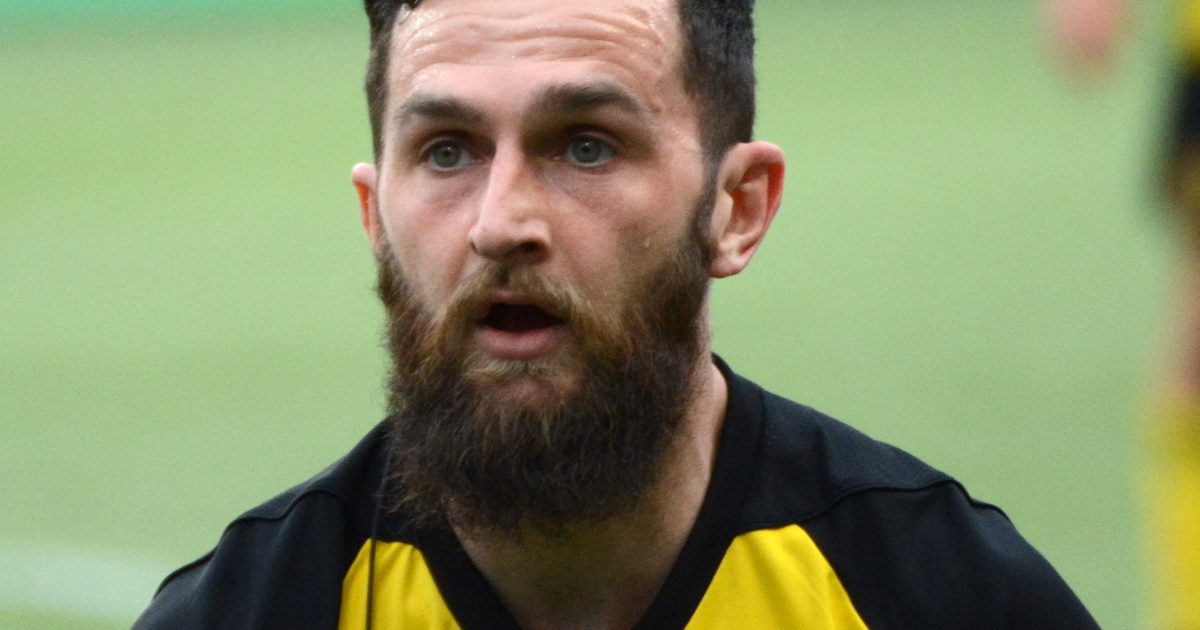
Photo: Hayden Schiff from Cincinnati, USA, CC BY 2.0 https://creativecommons.org/licenses/by/2.0, via Wikimedia Commons.
Sources
- Mirage News. New Protocol for On-Pitch Concussion in Football. https://miragenews.com/new-protocol-for-on-pitch-concussion-in-football/
- Bioengineer.org. International Consensus Recommends New Football-Specific On-Pitch Concussion Assessment Protocol. https://bioengineer.org/international-consensus-recommends-new-football-specific-on-pitch-concussion-assessment-protocol/
- Sport and Recreation Alliance. UK Concussion Guidelines for Grassroots Sport (November 2024 update). https://sportandrecreation.org.uk/files/uk-concussion-guidelines-for-grassroots-non-elite-sport---november-2024-update-061124084139.pdf
- The FA. Heading in Football. https://www.thefa.com/football-rules-governance/policy/heading-in-football
- University of Glasgow / FIELD Study. FIELD study: neurodegenerative disease mortality in former professional footballers. https://bjsm.bmj.com/content/53/23/1520
- Concussion in Sport Group. CRT6 / SCAT6 tools. https://concussioninsportgroup.com/scat-tools/
Keeping pace with evolving football concussion science requires a framework that is built to update. The Luca concussion management platform for schools maps every element of your football concussion protocol to the UK Grassroots Guidelines, covering identification, documentation, return-to-play staging, and return to learning - so your school is ready for every incident, on every pitch.