Kyler Murray's Concussion and the NFL Protocol - What UK Grassroots Sport Must Know
Kyler Murray's first-quarter exit after a violent head collision has put NFL concussion protocol back in the spotlight. Here is what the incident means for UK grassroots coaches and school sports staff.
Kyler Murray's Concussion and the NFL Protocol - What UK Grassroots Sport Must Know
Key takeaways
- Kyler Murray was removed from play in the first quarter of his Minnesota Vikings debut after a head collision, triggering the NFL's concussion protocol.
- The NFL uses a multi-stage, medic-led assessment process that is structurally different from the UK grassroots protocol - and the two must not be confused.
- The "if in doubt, sit them out" principle applied to Murray on the sideline is exactly the same principle that UK coaches must apply, regardless of competitive pressure.
- UK grassroots sport operates under the UK Concussion Guidelines for Grassroots Sport (Sport and Recreation Alliance, November 2024 update), not NFL or elite American systems.
- Immediate removal is the non-negotiable first step. What happens next is where context matters.
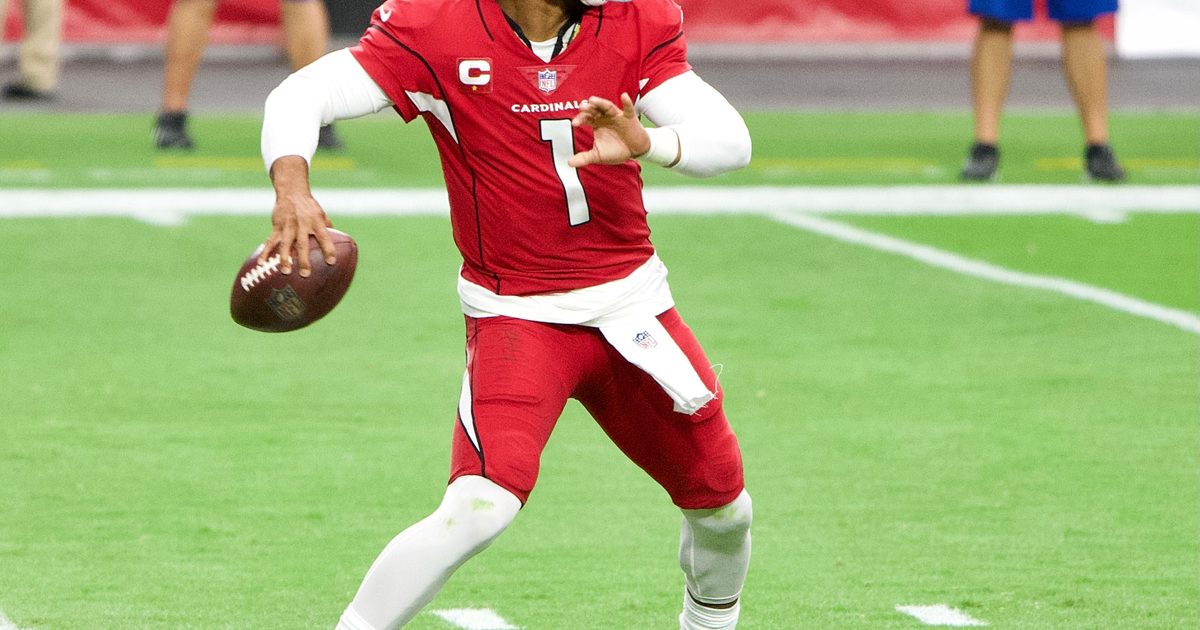
Kyler Murray left his Minnesota Vikings debut in the first quarter on 14 September 2026 after suffering a concussion following a violent head collision. Within minutes, he was ruled out for the game, with the NFL's concussion protocol taking over. Carson Wentz stepped in. The Vikings won. But the story that matters here is not the scoreline - it is what happened on that sideline, and what UK coaches, teachers and welfare officers can take from it.
What actually happened with Kyler Murray - and what the NFL protocol involves
According to reporting by ESPN and The New York Times, Murray took a direct blow to the head and was immediately assessed by team medical staff on the sideline. He did not return. The NFL's concussion protocol includes an unaffiliated neurotrauma consultant (UNC) who is independent of the team, a spotter in the stands with authority to trigger a mandatory removal, and a structured assessment that must be completed before any return to play is even considered.
The critical point is this: Murray was removed quickly, without hesitation, even though it was his debut and the game was competitive. That is the protocol working as designed.
How the NFL protocol differs from UK grassroots rules
The NFL system is built for a context that UK grassroots sport does not have: full-time medical staff on the sideline, independent spotters, and a designated quiet room for assessment. Importing NFL language or assumptions into a school fixture or a community rugby match causes real confusion.
UK grassroots sport operates under the UK Concussion Guidelines for Grassroots Sport, most recently updated in November 2024 by the Sport and Recreation Alliance. These guidelines apply to school sport, community clubs and recreational leagues - not elite professional environments.
The core grassroots rule is simpler precisely because the environment is simpler. There is no independent spotter. There is no UNC. What there is, in most cases, is a coach, a teacher, or a welfare officer who must make a call with limited information. The November 2024 guidelines are explicit: any player with a suspected concussion must be removed immediately and must not return to play on the same day. No exceptions, no "see how you feel in ten minutes," no pressure from selectors or parents changing the answer.
The elite HIA (Head Injury Assessment) protocol used in professional rugby - and the NFL's equivalent - allows a temporary removal for assessment with possible return. That provision does not exist in UK grassroots guidelines. Once a player comes off with a suspected concussion at grassroots level, they are off for the day.
Why the "if in doubt, sit them out" principle is the foundation
What Murray's removal illustrated was the professional application of a principle that is just as available to any school sports teacher or community coach in the UK: when there is doubt, you remove the player. The competitive stakes in an NFL season opener are enormous. The medical staff removed him anyway. That is the right call, and the November 2024 UK guidelines encode exactly the same logic for every level of the game.
Coaches sometimes worry about getting it wrong in the other direction - removing a player who turns out not to be concussed. The guidelines are clear on this: removing someone unnecessarily causes no harm. Leaving someone on who is concussed can. The asymmetry makes the decision straightforward.
For a detailed walkthrough of how to apply this principle on the sideline, see Luca's concussion identification and recognition guidance at /how-it-works/.
What signs should trigger immediate removal in UK sport?
The Concussion Recognition Tool 6 (CRT6), developed by the Concussion in Sport Group and referenced in the UK Grassroots Guidelines, gives non-medical staff a structured list of signs that should trigger immediate removal. These include:
- Visible disorientation or confusion after a head impact
- Loss of consciousness, even briefly
- Seizure or convulsive movements
- Unsteady gait or balance problems
- The player reporting headache, pressure in the head, blurred or double vision, nausea, or feeling "not right"
- Any period of memory loss around the incident
The CRT6 is not a diagnostic tool - it does not tell you whether concussion has occurred. It tells you whether a player should be removed and referred for clinical assessment. That is a crucial distinction. Coaches and teachers are not being asked to diagnose; they are being asked to recognise and refer.
What happens after Murray's removal is not what happens after a grassroots removal
In the NFL, the protocol includes a multi-stage assessment process and, potentially, return to play within days if the player clears every stage. Elite athletes have daily access to team physicians, neuropsychologists and specialist monitoring equipment.
In UK grassroots sport, the minimum stand-down for a confirmed or suspected concussion in under-18s is 21 days from the date of injury before return to contact. For adults, the minimum is 14 days, and even that is a floor, not a target. A player who presents symptoms at a later stage of the graduated return-to-play process goes back to the beginning of that stage - the clock does not restart from day one, but progress halts.
This is not excessive caution. The 21-day minimum for under-18s reflects the physiological reality that developing brains take longer to recover from concussive injury than mature brains, and that the consequences of premature return are potentially catastrophic. The CISG 6th Consensus Statement (Amsterdam, 2023) supports this conservative approach for paediatric athletes.
The cultural lesson from the Murray incident
One element of this story is worth naming directly: the pressure on Murray to stay in the game would have been considerable. His debut, a new team, a rivalry fixture, 60,000 supporters. He came off regardless. That is a culture that UK grassroots sport is still building, and school sport is the place to build it.
Young athletes routinely mask concussion symptoms to avoid being removed. Research cited by the UK Concussion Guidelines for Grassroots Sport and the CISG consensus identifies under-reporting as one of the primary failure points in grassroots concussion management. Coaches and teachers create the conditions in which honesty is either possible or discouraged - often without realising it.
Telling a pupil or player that they will not lose their place, that the team comes second, and that reporting symptoms is the right thing to do, is not soft. It is the standard that the NFL's protocol, for all its complexity, is designed to achieve.
What to do next if a player in your care takes a head knock
- Remove the player immediately. Do not wait for symptoms to develop.
- Use the CRT6 to structure your sideline observation. Download it free from concussioninsportgroup.com.
- Do not allow return to play on the same day, under any circumstances.
- Contact the player's parent or guardian as soon as practicable and advise them to seek clinical assessment from a GP or NHS 111 if you have any concern.
- Document the incident: time, mechanism, signs observed, actions taken.
- Begin the graduated return-to-play process only after the appropriate minimum stand-down, with symptom resolution confirmed at rest.
- If symptoms persist beyond 28 days, GP referral is the appropriate next step.
Photo: All-Pro Reels, CC BY-SA 2.0 https://creativecommons.org/licenses/by-sa/2.0, via Wikimedia Commons.
Sources
- The New York Times. Kyler Murray ruled out of Vikings debut, in concussion protocol after violent collision. https://www.nytimes.com/2026/09/14/sports/football/kyler-murray-concussion-vikings.html
- ESPN. QB Kyler Murray suffers concussion in Vikings debut. https://www.espn.com/nfl/story/_/id/kyler-murray-concussion-vikings-packers
- Sport and Recreation Alliance. UK Concussion Guidelines for Grassroots Sport (November 2024 update). https://sportandrecreation.org.uk/files/uk-concussion-guidelines-for-grassroots-non-elite-sport---november-2026-update-061124084139.pdf
- Concussion in Sport Group. CRT6 and SCAT6 tools. https://concussioninsportgroup.com/scat-tools/
- CISG 6th Consensus Statement on Concussion in Sport (Amsterdam, 2023). British Journal of Sports Medicine. https://bjsm.bmj.com/content/57/11/695
Luca's clinician-led platform supports schools and clubs through every stage of the concussion pathway - from sideline identification to graduated return to play. Whether your sport is rugby, football, basketball or anything in between, the framework is the same. See how it works at /how-it-works/.