George Furbank Stood Down for Premiership Opener - What Grassroots Rugby Must Know
Northampton's George Furbank has been stood down with immediate effect ahead of the Gallagher Premiership opener. Here is what the incident means for community and school rugby clubs.
George Furbank Stood Down for Premiership Opener - What Grassroots Rugby Must Know
Key takeaways
- George Furbank has been stood down with immediate effect and will miss Northampton Saints' Gallagher Premiership opener after a suspected concussion.
- Elite clubs apply the World Rugby Head Injury Assessment (HIA) protocol; grassroots and school clubs apply the UK Grassroots Concussion Guidelines (November 2024 update), a distinct and separate framework.
- "Stood down with immediate effect" is exactly what the November 2024 UK Grassroots Concussion Guidelines require at community level too: any player with suspected concussion must be removed immediately and not return that day.
- The minimum stand-down for under-18s at grassroots level is 21 days, not 24 hours, and medical clearance is required before return to contact.
- Community clubs should use this high-profile case as a prompt to check that their own removal and stand-down procedures are documented and understood by every coach.
Northampton Saints full-back George Furbank has been stood down with immediate effect and will miss the Gallagher Premiership season opener. The precise mechanism has not been detailed in reporting, but the club acted swiftly to remove him from training and playing duties. That decision - immediate, precautionary, undisputed - is worth examining for what it tells grassroots and school rugby clubs about how concussion management should work at every level of the game.
What happened and why the speed of the decision matters
Elite clubs in the Gallagher Premiership operate under the World Rugby Head Injury Assessment (HIA) protocol, which involves a three-stage medical evaluation by qualified team physicians - often conducted pitchside within minutes of an incident. When a club announces a player has been stood down "with immediate effect," it means the HIA pathway triggered removal before any further training session or match was allowed to proceed.
The speed is the point. No "wait and see." No "he says he feels fine." No debate with the coaching staff about whether the squad can afford to lose him for the opener. Removal first, assessment after.
That same principle sits at the heart of the UK Grassroots Concussion Guidelines (Sport and Recreation Alliance, November 2024 update): "If in doubt, sit them out." At community and school level, where there is no team physician and no HIA, the threshold for removal is any suspicion of concussion at all. The mechanism is recognition by a coach or match official, not clinical diagnosis.
How the elite protocol differs from what community clubs must follow
This is a distinction that causes genuine confusion at grassroots level, and it matters.
The World Rugby HIA is designed for a context where qualified doctors are pitchside, video replay is available, and a player can be assessed in a controlled environment within minutes. It allows for a temporary removal and potential return in the same match if the HIA is passed. World Rugby is explicit that the HIA is for elite competition only.
The UK Grassroots Concussion Guidelines (November 2024 update), published by the Sport and Recreation Alliance and endorsed by the RFU, RFL, and 12 other governing bodies, set out a different framework for community sport. Under those guidelines:
- Any player with suspected concussion must be removed immediately. There is no return-to-play on the same day, under any circumstances.
- Under-18 players must stand down for a minimum of 21 days before returning to contact. Adults face a minimum of 14 symptom-free days before beginning a graduated return.
- Medical clearance - from a GP or equivalent - is required before a player completes the graduated return to contact at grassroots level.
The RFU's HEADCASE programme for grassroots and school rugby mirrors these requirements and provides free training for coaches, teachers, and welfare officers.
What does "immediate" removal look like in practice?
At an elite club, "immediate" means within a few minutes of an incident, supervised by a team doctor. At a community club or school, "immediate" means the moment a coach, teacher, or parent notices any of the recognised signs of suspected concussion, using the Concussion Recognition Tool 6 (CRT6), which is freely available and requires no medical training to use.
The CRT6 signs that should trigger immediate removal include:
- A player who appears dazed, confused, or is not their usual self.
- A player who cannot recall events before or after the head impact.
- A player who has lost consciousness, even briefly.
- A player complaining of headache, pressure in the head, dizziness, nausea, blurred vision, or sensitivity to light.
- A player who shows abnormal behaviour - becoming emotional, slowed, or unresponsive to questions.
Critically, the player does not need to display all of these signs. One is enough. The CRT6 is a recognition tool for non-medical staff; it does not diagnose concussion. Its purpose is to prompt removal and referral, not to make clinical decisions.
Why high-profile cases are a coaching opportunity, not just a headline
When a Premiership player misses a high-profile fixture because of a concussion stand-down, it reinforces something community coaches sometimes struggle to communicate to players, parents, and administrators: this is not overcaution. This is protocol.
The pressure on grassroots coaches is real. A player insists they feel fine. Parents want to know why their child is being kept off. A club is short of players for a crucial fixture. The coach who holds the line - who removes a player and keeps them removed - is doing exactly what George Furbank's club did, just without the medical team behind them.
The Luca Safe Concussion Framework (/lscf/) supports clubs and schools to document each stage of this process, from initial removal through to medical clearance, creating an audit trail that protects both the player and the organisation.
The 21-day minimum and what community clubs often misunderstand
One of the most commonly misapplied aspects of the UK Grassroots Concussion Guidelines is the minimum stand-down period for under-18s. The guidelines set 21 days as the minimum - not the target, not the typical case, not the time after which a player is automatically ready. It is the floor below which no return to contact should occur, regardless of how well the player feels.
For adults, the minimum symptom-free stand-down before beginning the graduated return to sport is 14 days, with the graduated return itself adding further time before contact is permitted.
Neither of these periods applies to elite players like Furbank, whose return will be managed by team physicians and follow the elite HIA pathway. Applying elite timelines to grassroots or school players is one of the most consequential errors a community club can make.
What clubs and schools should do this week
The start of the Premiership season is a natural moment to audit your club or school's concussion procedures. Here are concrete actions:
- Check that every coach has completed RFU HEADCASE training (free, online, at englandrugby.com/run/player-welfare/headcase). Renewal is recommended annually.
- Ensure every coach can use the CRT6 and knows the threshold for removal is suspicion, not certainty.
- Review your stand-down records from last season. Were minimum stand-down periods observed? Were GP sign-offs obtained before contact return?
- Brief players and parents at the start of the season on the removal and stand-down rules. Culture shifts when players understand the rationale.
- Confirm your club or school has a documented concussion policy that references the November 2024 UK Grassroots Concussion Guidelines. A policy that references superseded guidance may leave your organisation exposed.
For schools running rugby programmes, there is an additional dimension: Keeping Children Safe in Education (KCSIE) frames concussion management as part of the broader safeguarding duty. A failure to follow recognised guidelines is not just a welfare failure; it sits within the safeguarding picture inspectors and governors will scrutinise.
The practical takeaway
George Furbank's stand-down is a straightforward illustration of what good concussion management looks like at the top of the game: act immediately, follow protocol, do not allow a player to return until the process is complete. For community clubs and schools, the protocol is different in its specifics but identical in its logic.
The UK Grassroots Concussion Guidelines (November 2024 update) set the standard for every affiliated club. The RFU's HEADCASE programme provides the training. The Luca Safe Concussion Framework provides the documented structure for schools and clubs to implement and evidence that standard. If your club or school cannot answer "yes" to every step in that chain, the start of the season is the moment to close the gap.
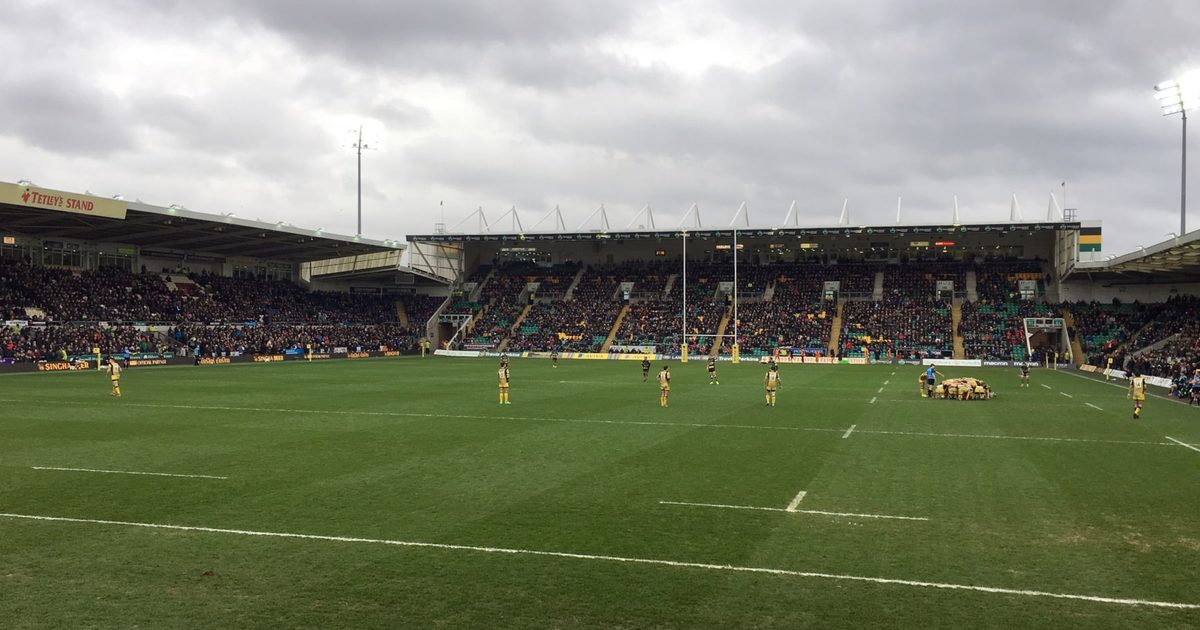
Photo: Original photograph by David Jones; cropped by Blackcat, CC BY 2.0 https://creativecommons.org/licenses/by/2.0, via Wikimedia Commons.
Sources
- Ruck.co.uk. George Furbank stood down with immediate effect and will miss Gallagher PREM opener. September 2026. https://news.google.com/rss/articles/CBMixwFBVV95cUxQeFRZRmlXc201elVHUmFfRUd4UGVtQl8ybk1YSzQtRi1XV3RXbGdaR0pTUWhqQlBEaXBETWtVaDFHb05tNG1TcXhoSGNscG9tVUtEVGVkeG1YNUlWWEd1SlNXa01ySnlzRTZmb2JvTXh5MWk5VlBMVmxWMHN6NjhhOFRxVFBYWkhVUnJtSVo3eDRMTE9yTTJwX2d0UXh6SFMyeXVYTlJ0Y09iN0JUN0N1TVEyV1l0b1NzRFFPdExJYWRnbkh0YjBj?oc=5
- World Rugby. Head Injury Assessment (HIA) protocol. https://www.world.rugby/the-game/player-welfare/guidelines/concussion/hia
- Sport and Recreation Alliance. UK Concussion Guidelines for Grassroots Sport (November 2024 update). https://sportandrecreation.org.uk/files/uk-concussion-guidelines-for-grassroots-non-elite-sport---november-2024-update-061124084139.pdf
- England Rugby. HEADCASE concussion awareness programme. https://www.englandrugby.com/run/player-welfare/headcase
- Concussion in Sport Group. Concussion Recognition Tool 6 (CRT6). https://concussioninsportgroup.com/crt6/
- Department for Education. Keeping Children Safe in Education (KCSIE), September 2025 edition. https://www.gov.uk/government/publications/keeping-children-safe-in-education--2
The Luca Safe Concussion Framework gives rugby clubs and schools the documented structure to implement UK Grassroots Guidelines at every stage, from first removal to medical clearance. Download it free and see how it works at /lscf/.