Geelong's Concussion Crisis - What UK Grassroots Sport Must Learn
The Geelong Cats board crisis over a player concussion deal reveals how governance failures in elite sport carry direct lessons for UK schools and grassroots clubs managing head injuries.
Geelong's Concussion Crisis - What UK Grassroots Sport Must Learn
Key takeaways
- The Geelong Cats board held emergency crisis talks over how the club handled a player's concussion-related agreement, reported by ABC News Australia on 13 August 2026.
- The saga illustrates how poor concussion governance - at any level - creates institutional risk, not just player welfare risk.
- UK grassroots clubs and schools are not insulated from similar failures; the same governance gaps exist here.
- Documented concussion protocols are the practical difference between a defensible decision trail and a crisis meeting.
- UK schools and clubs should audit their concussion governance now, before an incident forces the conversation.
The Geelong Cats board convening crisis talks over a concussion-related deal is not just an Australian story. It is a governance story - and the governance failure at its core is one that UK grassroots clubs and schools are repeating every weekend. The details from ABC News Australia are still emerging, but the pattern is familiar: a concussion incident, a decision made without a clear documented framework, and an institution scrambling to account for how that decision was reached.
That pattern is exactly what proper concussion governance is designed to prevent. And in the UK, where the November 2024 UK Concussion Guidelines for Grassroots Sport (Sport and Recreation Alliance) have been in place for nine months, too many clubs and schools still cannot point to a documented protocol if asked.
What Is the Geelong Crisis Actually About?
ABC News Australia reported that the Geelong Football Club board held emergency meetings over a concussion-related agreement reached with a player. The specific terms of that agreement have not been fully disclosed publicly at the time of writing, but the reports make clear that board-level governance of the concussion matter became a crisis point. A second ABC report described the situation as an ongoing "saga," suggesting the issue involves multiple decision-making failures, not a single moment.
Whatever the precise details, the institutional consequences are visible: board-level intervention, public scrutiny, and reputational damage. These are the hallmarks of a governance failure that has moved beyond the clinical domain into organisational accountability.
Why Governance, Not Just Welfare, Is the Frame That Matters
It is easy to frame concussion stories as welfare stories: a player was hurt, they deserved better care. That framing is correct - but incomplete. When concussion incidents generate board-level crises, they have crossed from the medical into the governance domain.
The question stops being "did the player receive appropriate care?" and becomes "who decided what, when, on what documented basis, and under what institutional authority?" Those are governance questions. They are the questions an insurer, a regulator, an NGB, or a solicitor asks after something has gone wrong.
UK grassroots clubs and schools face exactly the same questions. Under the Health and Safety at Work etc. Act 1974, organisations that oversee sport have a duty of care toward participants. The KCSIE (Keeping Children Safe in Education) framework places equivalent obligations on schools for their pupils. Neither document mandates a specific concussion protocol by name - but both establish that reasonable care must be exercised and, critically, that the exercise of that care must be demonstrable.
"Demonstrable" is the operative word. A verbal instruction to "sit them out if they look groggy" is not demonstrable. A documented, reviewed, implemented concussion protocol is.
What UK Clubs and Schools Can Learn From This
The Geelong situation is an elite-level case in a professional sport with full-time medical staff, lawyers, and governance officers. The UK grassroots equivalent will not generate ABC News headlines - but it will generate an insurance dispute, a parent complaint to a governing body, or an Ofsted safeguarding concern. The scale is different; the governance principle is identical.
Three lessons apply directly to UK schools and clubs.
First, decisions need a documented basis. When a player is removed from a game, cleared to return, or placed on a graduated return-to-play pathway, those decisions should be logged at the time. Who made the decision? On what information? Under which protocol? If a dispute arises three months later, that log is the difference between a defensible position and an exposure.
Second, authority needs to be clear before an incident, not during one. The Geelong saga appears to involve uncertainty about who had authority over the concussion-related agreement. In a UK school context, this maps to the question: who has clinical authority over a pupil's return to contact training - the PE teacher, the Head of Sport, the school nurse, or an external clinician? The answer needs to be in the protocol before the incident, not negotiated in the car park afterwards.
Third, the board (or governors) should not be the first people to hear about a governance gap. Geelong's board discovered the problem after the fact. UK school governors and club boards should be reviewing concussion governance as a standing item, not as a crisis response. The November 2024 UK Concussion Guidelines for Grassroots Sport (Sport and Recreation Alliance) are explicit that governance oversight - who owns the protocol, how it is reviewed, how incidents are escalated - sits at institutional level, not just with the first-aider on the touchline.
What the UK Framework Actually Requires
The UK Concussion Guidelines for Grassroots Sport, updated in November 2024, require that any club or school operating sport for participants of any age applies a concussion recognition protocol, an immediate-removal policy, a stand-down period (minimum 21 days before return to contact for under-18s), and a graduated return-to-play pathway. They apply to all sports, not just contact sports, and to recreational as well as competitive contexts.
The guidelines are not legally binding in themselves - they are guidance, not legislation. But they establish the standard of reasonable care that the legal duty of care framework references. A club or school that follows them and documents that it has followed them is in a defensible position. One that cannot demonstrate either is not.
Luca's concussion governance documentation covers exactly what the Geelong case highlights: who made which decision, when, on what basis, and how it was escalated. That is the audit trail that governance requires. For UK schools, the Luca Safe Concussion Framework translates the November 2024 guidelines into an operational standard - the kind of document a governor, an NGB inspector, or an insurer can read and verify.
What Schools and Clubs Should Do This Week
Governance failures rarely announce themselves in advance. The Geelong board did not convene a crisis meeting because someone planned a governance failure; they convened one because nobody had built the systems that prevent them.
For UK schools and clubs, the practical steps are straightforward.
- Identify who holds institutional authority over concussion decisions in your organisation - the person whose name is on the protocol.
- Confirm your protocol aligns with the November 2024 UK Concussion Guidelines for Grassroots Sport.
- Check that every concussion incident in the last 12 months has a written record: what happened, what decision was made, by whom, and what the outcome was.
- Schedule a governor or board-level review of concussion governance in the next full cycle. This is not a sporting matter that sits with the Head of Sport alone; it is a duty-of-care matter that sits with institutional leadership.
The Geelong situation will resolve in the coming weeks or months, as these crises usually do. The UK clubs and schools that take the wrong lesson - that this is an elite-sport problem, remote from their own touchlines - are the ones most likely to find themselves in an equivalent position, at their own scale, when the next incident occurs.
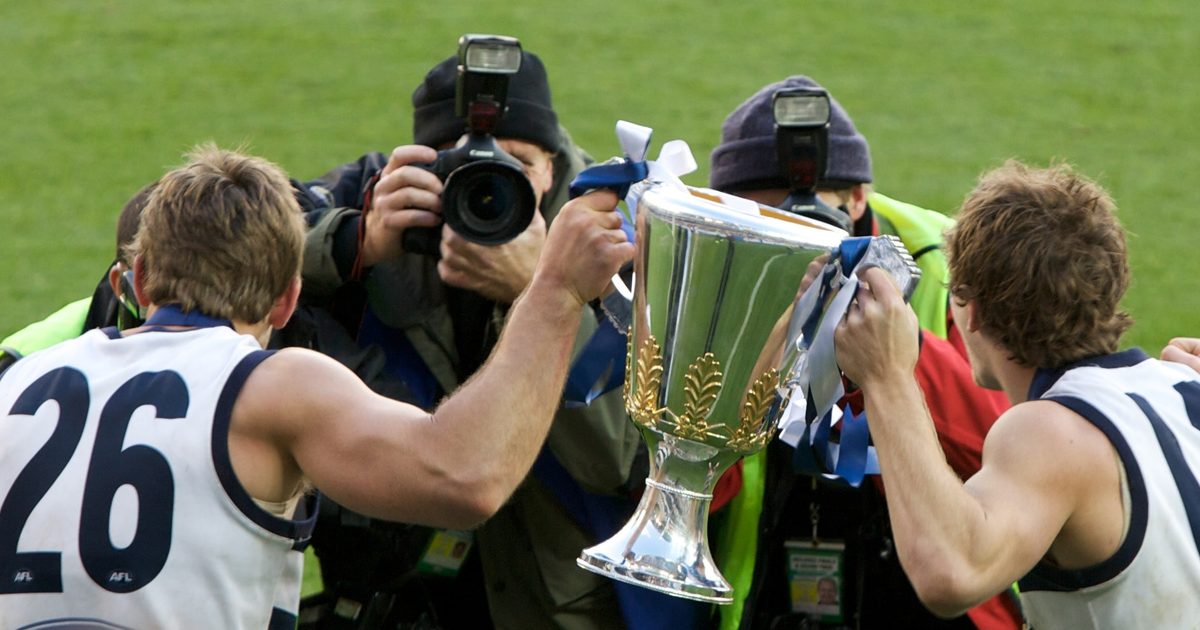
Photo: Paul Coster, CC BY 2.0 https://creativecommons.org/licenses/by/2.0, via Wikimedia Commons.
Sources
- ABC News Australia. Geelong Cats board holds crisis meeting over concussion deal. 13 August 2026. https://www.abc.net.au
- ABC News Australia. Geelong in crisis talks over concussion saga. 13 August 2026. https://www.abc.net.au
- Sport and Recreation Alliance. UK Concussion Guidelines for Grassroots Sport (November 2024 update). https://sportandrecreation.org.uk/files/uk-concussion-guidelines-for-grassroots-non-elite-sport---november-2024-update-061124084139.pdf
- Health and Safety Executive. Health and Safety at Work etc. Act 1974. https://www.hse.gov.uk/legislation/hswa.htm
- Department for Education. Keeping Children Safe in Education (KCSIE) 2024. https://www.gov.uk/government/publications/keeping-children-safe-in-education--2
If the Geelong saga has prompted your school or club to review its own concussion governance, the Luca Safe Concussion Framework gives you a documented, seven-domain standard to audit against - and to show your governors, your NGB, and your insurer. Download it free at /lscf/.