US College Concussion Protocols Are Failing Players - What UK Grassroots Sport Must Learn
A Columbus Dispatch investigation found systemic gaps in US college concussion protocols that let players return to sport too soon. Here is what UK schools and clubs can take from the findings.
US College Concussion Protocols Are Failing Players - What UK Grassroots Sport Must Learn
Key takeaways
- A Columbus Dispatch investigation found that US college concussion protocols have significant structural gaps, allowing symptomatic players to return to competition before they are clinically ready.
- The investigation highlights the danger of protocols that exist on paper but are not independently monitored or enforced in practice.
- UK grassroots sport operates under different rules, but the same failure mode - policy without practice - is a live risk here too.
- The UK Concussion Guidelines for Grassroots Sport (Sport and Recreation Alliance, November 2024 update) set a clear standard; the gap is implementation and documentation.
- Schools and clubs that cannot demonstrate they followed their own protocol are exposed, regardless of how well-written that protocol is.
The Columbus Dispatch published a detailed investigation this week into how US college concussion protocols fail to protect American football players from CTE. The reporting found that symptomatic athletes were cleared to return to play without adequate clinical oversight, that institutional pressures influenced return decisions, and that the protocols themselves contained loopholes that experienced coaches and medical staff learned to navigate. It is a US story. But the governance failure it describes is not uniquely American.
UK schools and sports clubs do not run NCAA programmes. But the same structural problem applies here: a concussion protocol that is not independently verified, consistently applied, and properly documented is not a protocol. It is a liability.
What did the Dispatch investigation actually find?
The investigation focused on concussion management within US college football, including programmes at Ohio State University. Its core findings were:
- Return-to-play decisions were influenced by competitive pressures, with athletes cleared by team-affiliated medical staff who faced implicit or explicit pressure to get players back on the pitch.
- The protocols lacked independent clinical oversight. The same institution responsible for winning games was responsible for certifying that a player was safe to compete.
- Documentation was inconsistent. When concussion events were not formally recorded, there was no audit trail to challenge unsafe return decisions.
- Players themselves masked symptoms to avoid being removed from rosters, a pattern the investigation linked to cultural norms around toughness and team loyalty.
None of this is new in the academic literature. The CISG 6th Consensus Statement (2023) explicitly identified athlete symptom under-reporting and institutional conflict of interest as two of the most significant obstacles to safe concussion management globally. What the Dispatch investigation adds is a granular, named account of how those obstacles play out at the institutional level.
Why does a US college story matter for UK grassroots sport?
The specific regulations are different. UK grassroots sport operates under the UK Concussion Guidelines for Grassroots Sport (Sport and Recreation Alliance, November 2024 update), not NCAA rules. There is no direct equivalence.
But the failure modes are identical.
Conflict of interest. A school PE teacher who coaches the first XV and is also responsible for concussion assessment faces a structural conflict. So does a volunteer club coach who wants their star player back for Saturday's cup tie. The UK guidelines address this by recommending that removal decisions are never made by a single person under competitive pressure - but in practice, many schools and clubs have no mechanism to enforce that separation.
Institutional pressure on athletes. The Dispatch investigation found players actively hid symptoms to avoid being stood down. Research from the CISG 6th Consensus confirms this is a global pattern, particularly in adolescent male athletes. UK coaches who have not actively built a culture where reporting is normal are dealing with the same dynamic, regardless of what their written policy says.
Documentation gaps. If a concussion event is not recorded, it effectively did not happen in governance terms. When a parent, governor, insurer, or - in the worst case - a coroner asks what happened, a verbal assurance that protocols were followed is not sufficient. The Dispatch investigation found that the absence of documentation was itself a systemic feature of under-managed concussion programmes.
What does "demonstrable duty of care" actually require in the UK?
UK schools have a duty of care under common law and, for the safeguarding dimension, under Keeping Children Safe in Education (KCSIE, 2024). Sports clubs have equivalent obligations under health and safety legislation and, increasingly, under their National Governing Body's rules.
"Demonstrable" is the operative word. It is not enough to have a policy. A school or club must be able to show that:
- The policy was known to relevant staff at the time of the incident.
- The policy was followed in that specific case.
- The steps taken were recorded at the time, not reconstructed afterwards.
- The records are retained and retrievable.
The Dispatch investigation illustrates what happens when institutional documentation fails: there is no contemporaneous record to demonstrate that the protocol was followed, and no way to refute a claim that it was not. That is a governance failure with potentially serious consequences for schools and clubs under UK law, not just US law.
The athlete symptom-masking problem in UK school sport
The investigation's reporting on athletes concealing symptoms deserves specific attention for UK schools. The UK Concussion Guidelines for Grassroots Sport recommend that all athletes - and in particular under-18s - are educated about why reporting symptoms is in their own long-term interest, not a sign of weakness.
Symptom masking is not primarily a discipline problem. It is a culture problem. Players hide symptoms because they have learned - through observation, through peer behaviour, through coaching culture - that admitting to a head injury carries a cost. Changing that requires deliberate, consistent messaging from coaches, teachers, and parents, reinforced over time.
Schools that want to build a culture of honest reporting can find practical guidance in the Luca for Schools framework, which includes staff education and athlete-facing communication as core programme components.
Where the UK system is stronger - and where it is not
The UK framework has structural advantages over what the Dispatch investigation describes.
The November 2024 UK Grassroots Guidelines mandate a minimum 21-day stand-down from contact for under-18s following suspected concussion, with graduated return overseen by appropriate adults following a structured protocol. This is a more conservative standard than many US college protocols, and it applies to all community sport, not just elite programmes.
The NHS and The Children's Trust both provide publicly accessible guidance that supports the same conservative approach.
But the UK system has no mandatory independent verification mechanism at grassroots level. A school or club can write an excellent concussion policy and then operate nothing like it in practice. Without independent clinical oversight, regular audit, or documented case-by-case records, there is no way to distinguish a school that is managing concussion well from one that is managing the paperwork.
This is precisely the gap the Dispatch investigation exposes in the US context. It is the same gap that the Luca Safe Concussion Framework is designed to close: turning a written policy into a documented operational standard, with a clinical audit trail that demonstrates practice, not just intent.
What schools and clubs should do now
The Dispatch investigation is a prompt to ask three concrete questions about your own programme:
1. Does a conflict of interest exist in your current process? Is the person responsible for concussion assessment also the person under competitive pressure to return athletes to play? If so, what is the mechanism to remove that conflict? Schools and clubs should identify a named second decision-maker who is not the head coach.
2. Are your concussion events being documented at the time they happen? Not retrospectively. Not in a coach's head. A contemporaneous written record, even a simple one, is the minimum required to demonstrate that a protocol was followed. If your current process produces no document, it produces no evidence.
3. Do your athletes know that reporting symptoms is expected and supported? If the answer is "we've mentioned it," that is probably not sufficient. Active, repeated messaging - from coaches, PE staff, and peers - is what changes the reporting culture the Dispatch investigation found so badly broken.
Practical next steps
- Review your current concussion policy and ask: does following this policy produce a written record for every incident?
- Identify whether a conflict of interest exists in your current identification and return-to-play process, and name a second decision-maker.
- Check that your staff have completed recognised concussion awareness training. RFU HEADCASE, FA concussion education, and equivalent NGB resources are available at no cost.
- Audit whether your athletes have received explicit education about symptom reporting, not just the adults around them.
- If you have not already, benchmark your practice against the seven domains of the Luca Safe Concussion Framework.
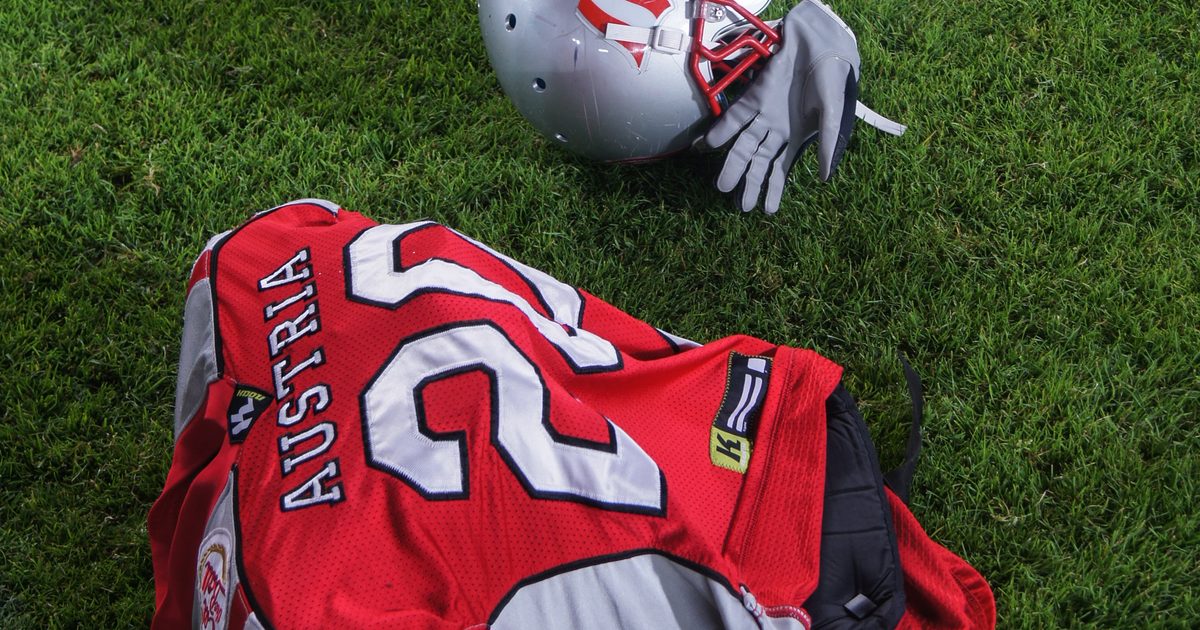
Photo: AleXXw, CC BY-SA 3.0 at https://creativecommons.org/licenses/by-sa/3.0/at/deed.en, via Wikimedia Commons.
Sources
- The Columbus Dispatch. Concussion rules fail to protect Ohio State football players from CTE (October 2026). https://www.dispatch.com/story/sports/college/ohio-state/2026/10/21/concussion-rules-fail-to-protect-ohio-state-football-players-from-cte/75436992007/
- The Columbus Dispatch. Dispatch investigation reveals shortcomings in college concussion protocols (October 2026). https://www.dispatch.com/story/sports/college/ohio-state/2026/10/22/dispatch-investigation-reveals-shortcomings-in-college-concussion-protocols/
- Sport and Recreation Alliance. UK Concussion Guidelines for Grassroots Sport (November 2024 update). https://sportandrecreation.org.uk/files/uk-concussion-guidelines-for-grassroots-non-elite-sport---november-2024-update-061124084139.pdf
- Concussion in Sport Group. CISG 6th Consensus Statement on Concussion in Sport (2023). British Journal of Sports Medicine. https://bjsm.bmj.com/content/57/11/695
- Department for Education. Keeping Children Safe in Education (KCSIE, 2024). https://www.gov.uk/government/publications/keeping-children-safe-in-education--2
- NHS. Concussion. https://www.nhs.uk/conditions/concussion/
The governance failures exposed in this investigation are a reminder that a concussion protocol is only as strong as the documentation and culture behind it. If you want to audit your school or club's current position against a structured, seven-domain standard, the Luca Safe Concussion Framework is free to download at /lscf/.