New Concussion Study in Female Rugby Players: What Schools and Clubs Need to Know
A new BBC-reported study on head injuries in female rugby players adds to growing evidence that concussion presents differently in women and girls, with direct implications for school and club concussion management.
New Concussion Study in Female Rugby Players: What Schools and Clubs Need to Know
Key takeaways
- A newly reported study on head injuries in female rugby players adds to a growing body of evidence that concussion risk and symptom presentation differ between sexes.
- Current UK Grassroots Concussion Guidelines (November 2024 update) apply equally to all players, regardless of sex, but the research increasingly suggests female-specific awareness is warranted.
- Schools and clubs running girls' or women's rugby programmes should review whether their identification and monitoring processes account for sex-based differences in symptom presentation.
- The "if in doubt, sit them out" principle remains the correct touchline call for every player, male or female.
- No protocol change is needed today, but the evidence base is moving, and staff education should move with it.
A BBC-reported study on concussion and head injuries in female rugby players has put the spotlight back on a research gap that grassroots rugby has been slow to close. While the sport has invested heavily in concussion science over the past decade, much of that work has focused on elite male players. The emerging picture for women and girls is more complicated, and for school and club staff running female rugby programmes, that matters right now.
This article sets out what the current evidence shows, what it means for concussion identification in girls' and women's rugby, and what practical steps schools and clubs should take today.
What did the study report?
The BBC's coverage highlighted research examining head injury patterns in female rugby players, adding to a body of work that has consistently found women and girls differ from their male counterparts in how concussion is experienced, reported, and recovered from.
While the full detail of the latest study was still being assessed at time of writing, the headline findings align with existing peer-reviewed work: female rugby players may experience higher rates of reported concussion symptoms, are more likely to report certain symptom types (particularly headache, emotional disturbance, and cognitive fog), and may face longer average recovery timelines.
This is not a new observation. A 2023 paper published in the British Journal of Sports Medicine found that female athletes across contact sports reported more symptoms and took longer to return to play than male athletes with equivalent injuries. The Glasgow University FIELD study and related work have flagged the same pattern in football; rugby research is arriving at similar conclusions.
Why do concussion patterns differ between sexes?
No single explanation accounts for the observed differences. The current hypotheses, drawn from CISG 6th Consensus Statement (2023) and associated research, include:
Biomechanical factors. On average, women and girls have less neck muscle mass relative to head mass, which may result in greater rotational acceleration during head impacts. This is a structural feature, not a fitness shortcoming, and it applies across age groups.
Hormonal factors. Research has explored whether oestrogen and progesterone cycles influence the brain's response to injury and subsequent recovery. Evidence is preliminary but consistent enough to warrant attention.
Reporting behaviour. Some studies suggest female athletes may be more willing to report symptoms, which could partly explain higher reported rates. This is not the same as a higher incidence of injury, and conflating the two is a common error.
Baseline neurocognitive differences. Pre-injury baselines differ between sexes on some standardised measures, which can complicate post-injury comparison if baseline testing is not individualised.
The honest position, as the CISG 6th Consensus Statement acknowledges, is that the sex-based science is not yet settled. What is settled is that applying male-derived norms uncritically to female players is not good practice.
What does this mean for school girls' rugby programmes?
For secondary schools running girls' rugby, the practical implications are less about changing the protocol and more about sharpening the human side of it.
Identification may require more active questioning. Male players are more likely to present with the dramatic visible signs of concussion (loss of consciousness, balance failure, confusion on the pitch) than female players in contact sport research. Girls may present with subtler symptoms: persistent headache, feeling "not quite right", emotional lability, or sensitivity to light. These are easy to miss in the noise of a match or training session.
The CRT6 (Concussion Recognition Tool 6) remains the recommended touchline tool for non-medical staff. It was developed for universal application and covers symptom self-report, which is the category where female players are more likely to flag a problem. Staff should be specifically trained to initiate that conversation rather than waiting for a player to volunteer it.
"I'm fine" should be treated with the same scepticism regardless of who says it. Research consistently shows that athletes of all sexes mask symptoms, but cultural and social pressures differ. In a school rugby context, a girl who wants to keep playing for her team, stay on the pitch, or avoid being singled out may be less likely to report spontaneously than a clinical framework would assume. The UK Grassroots Concussion Guidelines (Sport and Recreation Alliance, November 2024) are clear: removal does not require certainty of concussion. Doubt is sufficient.
Return to play decisions should not be rushed. If the evidence on recovery time in female players is correct, then a conservative approach to the GRTP stages is even more important for girls. The 21-day minimum stand-down for under-18s applies to all pupils. But "minimum" is a floor, not a target.
What about women's club rugby?
For community clubs running women's or girls' sections, the issues are similar but the governance context is slightly different. The RFU's HEADCASE programme is required training for coaches at affiliated clubs. It covers universal principles, but welfare officers and coaches working with female players should supplement this with awareness of the sex-specific evidence.
Clubs should also ensure that welfare officers understand the research on reporting behaviour. A female player who says she feels fine should receive the same structured questioning that good practice demands for any player: not dismissal of her self-report, but active use of the CRT6 symptom checklist.
The Luca Safe Concussion Framework supports clubs running multi-section programmes, with documentation that captures individual player history and symptom progression over time. See /for-clubs/ for how this applies to grassroots rugby club settings.
Is the protocol different for female players right now?
No. The UK Grassroots Concussion Guidelines (November 2024) do not specify different protocols by sex, and neither does the CISG 6th Consensus Statement. The evidence base is not yet strong enough to justify a separate female-specific protocol at grassroots level.
What the research does justify is:
- Ensuring that all coaching and welfare staff are aware that symptom presentation may differ, and that subtle, self-reported symptoms in female players deserve the same weight as obvious physical signs in male players.
- Building a concussion culture where female players understand that reporting symptoms is expected and valued, not a reason to be excluded from the team.
- Applying the minimum 21-day stand-down for under-18s rigorously, without pressure from players, parents, or fixture schedules to cut it short.
What schools and clubs should do now
Review staff awareness. Do the coaches and PE staff running your girls' rugby programme know about sex-based differences in concussion presentation? If not, this is the moment to close that gap.
Revisit your school concussion policy to confirm it covers all sports and all players without assumptions baked in from male-dominated research contexts. Luca's resources for schools include a structured framework built around the UK guidelines.
Check your CRT6 usage. Is the tool being used actively and consistently in girls' rugby fixtures and training, or is it reserved for the more dramatic incidents? Every suspected concussion, however subtle, should trigger the same process.
Document everything. Symptom presentation, removal decisions, and return-to-play stages for every player should be in your records. This is not just good clinical practice; it is the foundation of demonstrable duty of care.
Keep watching the evidence. This is a fast-moving area of concussion science. The next update to the UK guidelines, or the next CISG consensus, may include sex-specific guidance. Having the right culture and systems in place now means you will be ready to implement it.
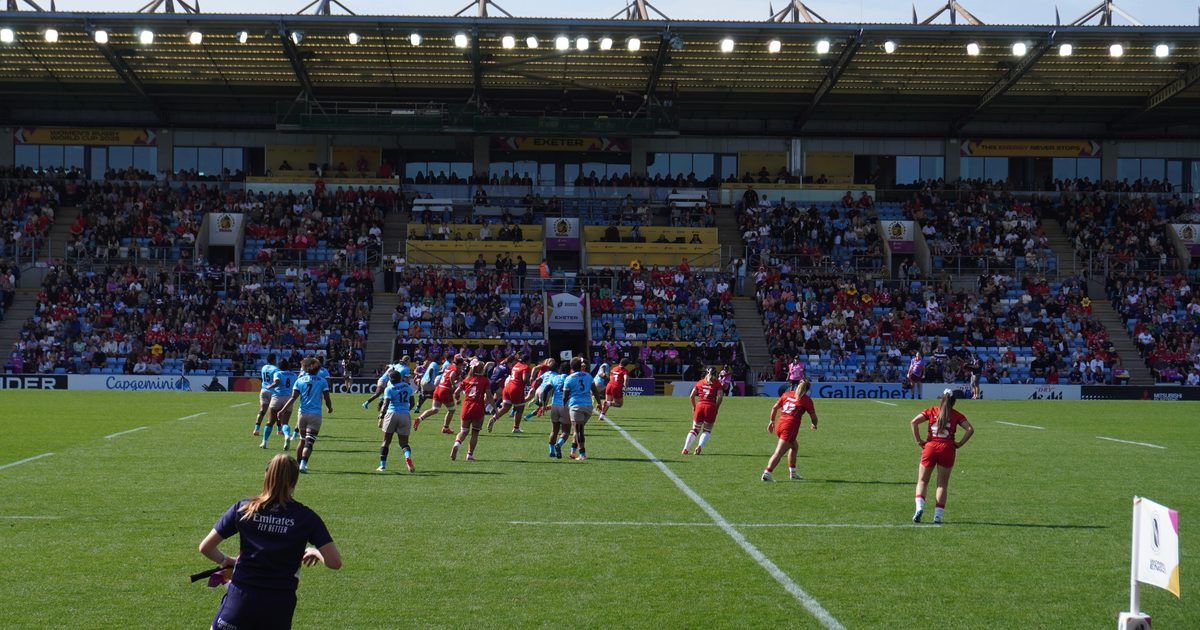
Photo: Spudem, CC BY 4.0 https://creativecommons.org/licenses/by/4.0, via Wikimedia Commons.
Sources
- BBC. Rugby concussion head injuries study in female rugby players. https://www.bbc.co.uk/sport/rugby-union
- Sport and Recreation Alliance. UK Concussion Guidelines for Grassroots Sport (November 2024 update). https://sportandrecreation.org.uk/files/uk-concussion-guidelines-for-grassroots-non-elite-sport---november-2024-update-061124084139.pdf
- Concussion in Sport Group. CISG 6th Consensus Statement (2023). https://bjsm.bmj.com/content/57/11/695
- Concussion in Sport Group. CRT6 Concussion Recognition Tool. https://concussioninsportgroup.com/scat-tools/
- England Rugby. HEADCASE player welfare programme. https://www.englandrugby.com/run/player-welfare/headcase
Luca's clinician-led platform supports schools and clubs to manage concussion from first incident to safe return, with structured documentation built around current UK guidelines and emerging research. If you run a girls' or women's rugby programme and want to review how your concussion management measures up, see /for-clubs/ or /for-schools/ to find out how Luca can help.