Bristol Bears Star Stood Down Indefinitely After Concussions - What Grassroots Rugby Must Know
Bristol Bears centre Benhard Janse van Rensburg has been stood down indefinitely after repeated concussions, raising urgent questions about cumulative concussion management in community and school rugby.
Bristol Bears Star Stood Down Indefinitely After Concussions - What Grassroots Rugby Must Know
Key takeaways
- Bristol Bears centre Benhard Janse van Rensburg has been stood down indefinitely after suffering repeated concussions, with no return date set.
- "Indefinite stand-down" reflects the principle that cumulative concussion history, not just a single incident, should drive return-to-play decisions.
- The UK Concussion Guidelines for Grassroots Sport (November 2024 update) apply the same principle at community and school level: each new concussion must be assessed in the context of the player's full history.
- Grassroots clubs and schools are not required to have team doctors, but they are required to have a documented management process.
- Coaches who cannot access Janse van Rensburg's level of medical support still have clear obligations under the Sport and Recreation Alliance framework.
Bristol Bears have confirmed that centre Benhard Janse van Rensburg has been stood down indefinitely following a series of concussions, with no timeline given for his return to contact training or match play. The news, reported by Bristol Live, is a reminder that concussion management at any level of rugby is not simply about a single incident. It is about the accumulating picture across a player's career or season. For grassroots clubs and schools, the principle is the same, even if the clinical resources are very different.
What does "stood down indefinitely" actually mean?
An indefinite stand-down is not a ban, a retirement, or a diagnosis of a specific condition. It means the medical team has decided that the risk of allowing the player to return to contact activity cannot currently be quantified to an acceptable level. In practice, it reflects the growing understanding within rugby medicine that cumulative concussion exposure - multiple events over months or years - carries risks that no single return-to-play (RTP) protocol is designed to address on its own.
At elite level, decisions like this sit with team physicians, neurologists, and neuropsychologists with access to full medical histories, serial cognitive testing, and neuroimaging where indicated. The process is rigorous and clinical.
At grassroots and school level, the clinical depth is not the same. But the obligation is not absent. It is proportionate.
What the UK grassroots guidelines require when a player has multiple concussions
The UK Concussion Guidelines for Grassroots Sport (Sport and Recreation Alliance, November 2024 update) are clear that every suspected concussion must be managed through the full graduated return-to-sport (GRAS) protocol. The minimum stand-down for a confirmed concussion is 21 days for adults and longer for under-18s, with medical clearance required before return to contact.
What the guidelines also make clear, though it is sometimes overlooked in practice, is that medical clearance should account for a player's recent concussion history, not just the current incident. A player who has had two concussions in a season is not in the same clinical position as a player having their first. The GP or clinician asked to sign off a return should be given full information about previous incidents, not just the most recent one.
This means clubs and schools have a responsibility to keep accurate, dated records of every concussion event. Without that documentation, continuity of care is impossible. The player's history disappears when they move clubs, change schools, or see a different GP. That is not a safe position.
Why cumulative concussion matters: the science in brief
The concern about cumulative concussion exposure is not new, but the evidence base for it has grown substantially in the last decade. Research from Glasgow University's FIELD study, which examined Scottish professional footballers, and from rugby-specific work by groups including Imperial College London has consistently pointed to career-level exposure, not single incidents, as the primary driver of long-term neurological risk.
It is important to be precise here. No study demonstrates that a specific number of concussions in youth or community sport causes a specific outcome. The research has largely been conducted in professional players with very high career exposure. The direct applicability to a 16-year-old playing school first XV rugby, or a club player in their second season, is not established.
What is established, and what the CISG 6th Consensus Statement (2023, Amsterdam) affirms, is that younger, developing brains recover more slowly from concussion and that conservative management at each individual event is the most effective tool available for reducing cumulative burden across a playing career. Every concussion managed well is a concussion that does not become part of a heavier cumulative load.
What grassroots clubs must do when a player has multiple concussions
This is where the Janse van Rensburg case has direct relevance for a community club welfare officer or school Head of Sport, even if the clinical specifics are very different.
First, maintain a complete concussion record for every player. Date of incident, mechanism, symptoms recorded, stage reached in the GRAS protocol, date of clinical sign-off. This is the minimum. Without it, a player's next coach, next school, or next GP is working blind.
Second, refer to a GP (not just wait out the GRAS protocol) when a player has had more than one concussion in a season. The November 2024 UK guidelines are explicit that players with a complex concussion history, including repeated events within a season, should be referred to their GP or to a sports medicine physician before returning to contact play. The GRAS protocol alone is not sufficient in these cases.
Third, do not allow coaches to manage concussion history informally. If a player mentions in passing that they "had a knock earlier in the season," that information belongs in the documented record, not in a coach's memory. Welfare officers should ask about concussion history at the start of each season.
Fourth, understand that "medical clearance" for a player with a complex history means more than a GP confirming no current symptoms. It means a clinician who has been given the full history making a judgment about readiness to return. Clubs and schools should provide that history to the GP in writing. Luca's clinician-led platform is built to produce exactly this kind of documented record, making GP sign-off informed rather than approximate.
The "indefinite" element: when is it appropriate for grassroots?
Elite clubs can make indefinite stand-down decisions because they have medical staff embedded in the club and can monitor the player on an ongoing basis. Most grassroots clubs and schools do not have that infrastructure.
At community level, the appropriate equivalent when a player has had multiple concussions in a season is to refer to a GP or sports medicine physician and to make return to contact training conditional on written clearance, with the full incident history provided. The club or school should not set its own return date in these circumstances. That decision belongs with the clinician.
This is not about being overly cautious. It is about being clear on who has the competence and the information to make a safe decision. A welfare officer or teacher can manage the GRAS protocol for a straightforward first concussion with reasonable confidence. When the history is more complex, the decision requires clinical input.
What this means for school rugby specifically
Schools face a specific challenge that professional clubs do not: players change year groups, teacher-coaches change, and institutional memory is short. A Year 12 pupil who had two concussions in Year 10 may not be known to the current Head of Sport. This is a genuine safeguarding risk.
The November 2024 UK Grassroots Guidelines apply to schools exactly as they apply to community clubs. The under-18 provisions are more conservative: the minimum stand-down is 21 days from the date of injury (not from symptom resolution), and medical clearance is required before any return to contact. Schools should be treating this as a safeguarding matter, not just a sports administration one.
A school that has no system for tracking a pupil's concussion history across years, or for passing that history to external coaches running after-school training, has a documentation gap that could have serious consequences. The Luca Safe Concussion Framework addresses this directly, providing a seven-domain structure that includes longitudinal record-keeping as a core element.
The bottom line for clubs and schools
The Janse van Rensburg situation is a high-profile illustration of something the UK guidelines already require at every level: that concussion management is not episodic. It is continuous. Each incident exists in the context of everything that came before it.
Grassroots clubs and schools do not have team neurologists. But they do have the UK Concussion Guidelines, a duty of care to the players in their charge, and an obligation to document every incident fully enough that the next clinician in the chain can make an informed decision.
That documentation is not a bureaucratic exercise. It is the mechanism through which cumulative history becomes visible, and through which the safest possible decisions get made.
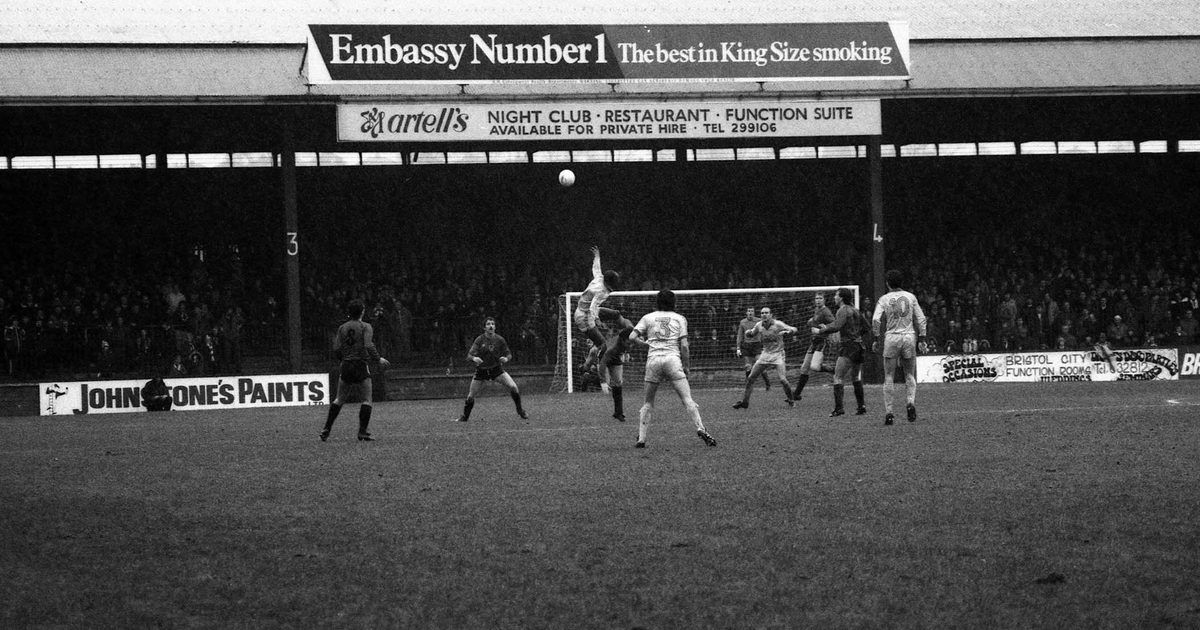
Photo: Steve Daniels, CC BY-SA 2.0 https://creativecommons.org/licenses/by-sa/2.0, via Wikimedia Commons.
Sources
- Bristol Live. Bristol Bears star Benhard Janse van Rensburg stood down indefinitely after concussions. https://news.google.com/rss/articles/CBMimgFBVV95cUxPaTZhZV9icGowSkd0ZnhWd2JQY1BoWjBkUHJOODlfVl9XZzVGRFlxM2twMGZkTFdEMnJ1UkIybWpmTGRMNTJwYV8wYmllRzFRWTYwYkR1RGxLbUZTY2lQYWZDSi1Db3luOUJ6UDZGa09KNG5sU195Z0VmVUctcjZPNEdmVHlqNUNFN1JBenR1eFBya0NWRzU3LUVB?oc=5
- Sport and Recreation Alliance. UK Concussion Guidelines for Grassroots Sport (November 2024 update). https://sportandrecreation.org.uk/files/uk-concussion-guidelines-for-grassroots-non-elite-sport---november-2024-update-061124084139.pdf
- Concussion in Sport Group. CISG 6th Consensus Statement on Concussion in Sport (Amsterdam 2023). https://bjsm.bmj.com/content/57/11/695
- University of Glasgow / FIELD Study. Neurodegenerative disease mortality among former professional soccer players. https://www.nejm.org/doi/full/10.1056/NEJMoa1908483
Luca's platform helps rugby clubs and schools build a complete, longitudinal concussion record so that every return-to-play decision, whether after a first incident or a fifth, is made with full clinical information. Explore how the framework works at /for-clubs/.