Australian Rules Limits Contact Training to Cut Concussion - What UK Sport Must Learn
Australian Rules Football has introduced formal limits on full-contact training sessions to reduce concussion incidence. Here is what the decision means for UK grassroots sport and schools.
Australian Rules Limits Contact Training to Cut Concussion - What UK Sport Must Learn
Key takeaways
- The AFL has moved to formally cap the number of full-contact training sessions players can participate in, citing concussion reduction as the primary driver.
- The intervention targets cumulative head-impact exposure in training, not just match-day concussion events.
- UK grassroots guidelines do not yet contain equivalent training-load provisions, but the direction of travel is clear.
- Schools and clubs in the UK can act now by auditing contact training volume and embedding technique-first progressions.
- Concussion management frameworks need to cover the training environment, not just fixtures and matches.
Australian Rules Football's governing body, the AFL, has moved to formally limit full-contact training sessions across its clubs, according to reporting by RFI. The rationale is straightforward: a significant proportion of head impacts in contact sport happen during training, not during matches. Capping contact training reduces cumulative exposure. It is a meaningful step, and it has direct implications for how UK grassroots sport and schools think about concussion prevention.
What did the AFL actually decide?
The AFL's decision limits the number of full-contact training sessions clubs may schedule per week during the pre-season and regular season. The precise session caps are set at league level, with clubs required to log and report compliance.
The policy is an extension of logic already embedded in the November 2024 UK Concussion Guidelines for Grassroots Sport (Sport and Recreation Alliance), which note that cumulative head-impact exposure is a relevant factor in managing concussion risk - but which do not yet specify training-load limits for community sport. The AFL has taken the next step: turning principle into a quantified operational rule.
It is worth being clear about what this is and is not. The AFL policy does not claim to prevent concussion. It claims to reduce the frequency of head impacts across a season. Those are related but distinct goals. The CISG 6th Consensus Statement (Amsterdam, 2023) distinguishes between concussion prevention (limiting the event) and cumulative-impact reduction (limiting total exposure over time). The AFL measure addresses the second.
Why training matters as much as matchday
In most contact sports, coaching staff and welfare officers focus their concussion attention on match day: the identification protocol, the removal decision, the post-incident pathway. That focus is correct and necessary. But it is incomplete.
Research cited in the CISG 6th Consensus Statement indicates that a substantial share of sub-concussive and concussive head impacts in contact sports occur during training, particularly in full-contact drills, collision-heavy conditioning sessions, and unconstrained contact phases of training. In rugby, for example, World Rugby's Tackle Ready programme was built partly on the insight that technique breakdown in training was a significant source of head contact.
The AFL decision formalises what sport science has been pointing toward for several years: if you want to reduce cumulative head-impact load, you have to look at training volume and structure, not just matchday events.
What do the UK Grassroots Concussion Guidelines say about training?
The November 2024 UK Concussion Guidelines for Grassroots Sport (Sport and Recreation Alliance) set out the now-familiar framework for recognising, removing, and managing suspected concussion. They specify the minimum 21-day stand-down for under-18s and graduated return-to-play stages that apply at community level.
What they do not yet contain is a training-load provision equivalent to the AFL's session cap. There is no specified limit on full-contact training volume for community rugby, football, or other contact sports at grassroots level.
That is not a criticism of the guidelines. Community sport operates differently from professional sport: coaching hours are shorter, sessions are less frequent, and the infrastructure for session-level compliance monitoring rarely exists. A blanket session cap would be difficult to enforce and potentially counterproductive in contexts where clubs train once a week anyway.
But the AFL decision signals a direction. UK NGBs - particularly the RFU, RFL, and FA - will be watching, and the question of training-load management is likely to feature in future guideline updates. Schools and clubs that are ahead of the curve now will not need to catch up later.
What can UK schools and clubs do right now?
The absence of a formal training-load rule does not mean the absence of action. There are practical steps any Head of Sport, club welfare officer, or coach can take today, within existing UK guidance.
Audit contact training volume. How many sessions per week involve full, unrestricted contact? Is that number driven by coaching necessity or habit? In most community sport contexts, full contact is less frequent than coaches assume when they examine the evidence.
Adopt a technique-first approach before contact. World Rugby's Tackle Ready programme, and equivalent initiatives in other sports, recommend a clear progression: unopposed technique, then opposed at reduced intensity, then full contact. Compressing that progression or skipping straight to full contact increases impact frequency unnecessarily.
Apply the "if in doubt, sit them out" principle to training, not just matches. The November 2024 guidelines apply to all sport activity, including training sessions. A suspected concussion during a Tuesday training session triggers the same removal and stand-down protocol as one on a Saturday match.
Build training-environment awareness into staff education. Most concussion training programmes (including RFU HEADCASE) are framed around matchday scenarios. Coaches should explicitly consider what their concussion identification and response protocol looks like when an incident happens mid-drill at a training session with no match officials present.
Document contact training load. Even without a regulatory requirement, keeping a simple log of training session type (light contact, full contact, non-contact) gives schools and clubs a baseline. If a player sustains multiple concussions, that documentation becomes relevant to understanding their cumulative exposure.
What the evidence says about training-load interventions
The evidence base for training-contact-limit interventions is developing rather than established. A 2021 study published in the British Journal of Sports Medicine examined head-impact data in elite rugby and found that approximately 60% of all head impacts occurred during training, with contact training sessions producing the highest per-session impact counts.
In American football - where impact monitoring is more advanced than in most UK sports - similar proportions have been observed, with full-contact practice sessions generating head-impact counts comparable to live game exposure. That finding was a significant driver behind restrictions on full-contact practice introduced by several US state high school athletic associations from 2011 onward.
The AFL decision is therefore not a leap into the unknown. It applies a principle that has already been tested, in different forms, in other contact sports. The question for UK sport is how quickly that learning is integrated into domestic guidance and practice.
It is also worth noting what the AFL decision does not resolve. Reducing training-contact volume reduces exposure; it does not eliminate the risk of concussion during training, nor does it address matchday incidence. A complete concussion management approach requires both prevention-side interventions (technique, load management, equipment within its evidential limits) and management-side infrastructure (identification, removal, graduated return to play, clinical oversight). The Luca Safe Concussion Framework addresses the management side as a complete, documented system; prevention-side steps like those the AFL is now formalising are a complementary layer.
What to do next
For UK schools and clubs, three immediate actions follow from this news.
First, review your training structure. How many of your weekly sessions involve full contact? Is there a clear progression from non-contact to full contact within sessions, and across the pre-season period?
Second, confirm that your concussion identification and removal protocol applies explicitly to training sessions, not just matches. If your policy documents say "during a match," revise them.
Third, begin logging training session types, even informally. If UK guidelines introduce training-load provisions in a future update, clubs with existing records will have a head start on compliance.
Concussion prevention is a shared responsibility. The AFL's move is a signal. UK sport does not need to wait for a regulatory mandate to act on the underlying principle.
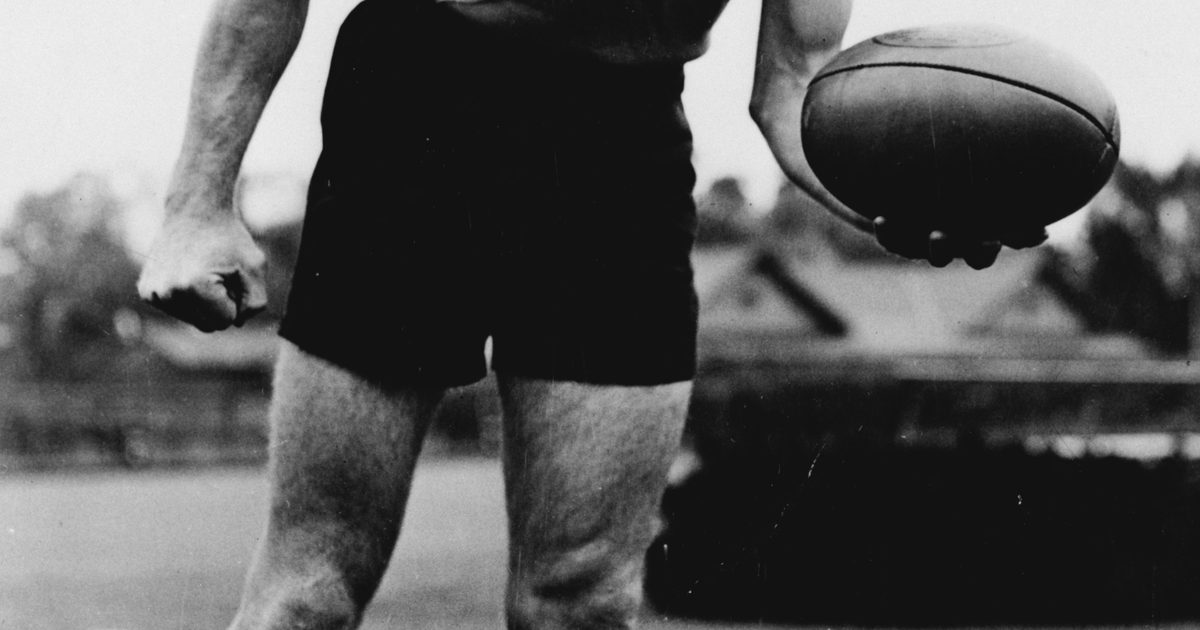
Photo: Unknown authorUnknown author, Public domain, via Wikimedia Commons.
Sources
- RFI. Australian Rules limits contact training to reduce concussion. (September 2026) https://www.rfi.fr/en/sports/20260906-australian-rules-limits-contact-training-to-reduce-concussion
- Sport and Recreation Alliance. UK Concussion Guidelines for Grassroots Sport (November 2024 update). https://sportandrecreation.org.uk/files/uk-concussion-guidelines-for-grassroots-non-elite-sport---november-2024-update-061124084139.pdf
- Concussion in Sport Group. CISG 6th Consensus Statement on Concussion in Sport (Amsterdam, 2023). https://bjsm.bmj.com/content/57/11/695
- World Rugby. Tackle Ready player welfare programme. https://www.world.rugby/the-game/player-welfare/education/tackle-ready
- British Journal of Sports Medicine. Head impact exposure in elite rugby union training and match play (2021). https://bjsm.bmj.com/content/55/3/137
Concussion prevention through training-load management is one layer of a complete approach. See how the Luca Safe Concussion Framework structures the full management pathway, from prevention context through to clinician-supervised return to play, giving schools and clubs the documented governance trail that NGBs, inspectors, and insurers are increasingly asking for.