AFL's Concussion Waiver Scandal: What UK Grassroots Sport Must Learn
An AFL club was forced to scrap a secret deal making a player legally responsible for future concussions. Here is what UK schools and clubs must understand about duty of care.
AFL's Concussion Waiver Scandal: What UK Grassroots Sport Must Learn
Key takeaways
- Geelong Football Club was forced to scrap a secret deal that reportedly shifted legal responsibility for future concussions onto a player with a history of head injuries.
- The AFL ruled the arrangement went "further than intended" and sanctioned the club.
- UK schools and clubs cannot contract out of their duty of care - waivers or consent forms do not remove legal responsibility.
- Documented concussion protocols are the foundation of a defensible governance position in the UK.
- The case is a live reminder that concussion governance is under scrutiny at every level of sport, not just elite.
An Australian rules football club has been forced to tear up a secret agreement that allegedly required a player with a history of concussion to accept personal legal liability for any future head injuries sustained while playing for the club. The Guardian reported on 6 August 2026 that Geelong Football Club came under widespread criticism after the arrangement became public. The AFL subsequently found the deal went "further than intended" and the club scrapped it. For UK schools, clubs, and welfare officers, the case raises an urgent question: could something similar happen here, and what does it tell us about where the boundaries of duty of care actually lie?
What happened at Geelong?
According to reporting by The Guardian and Fox Sports, a Geelong player with a documented history of concussion signed an agreement with the club that transferred legal responsibility for future concussions to the player himself. The deal was kept private. When it became public, the response from the Australian sporting community was immediate and hostile. The AFL investigated and concluded the arrangement exceeded what was permissible, leading Geelong to abandon it entirely.
The AFL has its own concussion protocols for elite competition. The existence of a side-agreement attempting to circumvent the liability implications of those protocols suggests the club was attempting to manage financial and legal risk, rather than the player's welfare.
Can a UK school or club do the same thing?
No. And any attempt to do so would be likely to make the situation worse, not better.
In England and Wales, a school's duty of care to its pupils is a common law obligation. It cannot be waived by a consent form, a parental signature, or any other agreement. The standard is that a school must act as a "reasonable parent" would in relation to the safety of children in its care - a test established through decades of case law and reinforced by the Health and Safety at Work etc. Act 1974 and the Department for Education's statutory guidance Keeping Children Safe in Education (KCSIE).
For sports clubs working with adult players, the position is slightly different but no less demanding. A club has a duty not to expose participants to unreasonable risk. A blanket liability waiver for a known, specific risk - a player with a documented history of concussion being required to absorb personal legal responsibility for future injuries - would almost certainly be unenforceable under UK law and would not protect the club if a claim were brought.
The Geelong case illustrates the exact trap that governance-focused organisations must avoid: treating liability as an administrative problem to be passed along, rather than a welfare problem to be managed properly.
What does duty of care actually require in practice?
The UK Concussion Guidelines for Grassroots Sport (Sport and Recreation Alliance, November 2024 update) set out clear expectations for community sport at every level. They do not relieve clubs or schools of responsibility; they define what responsible management looks like.
For schools specifically, the KCSIE framework requires that institutions demonstrate active, documented safeguarding of pupils. Concussion, as a potential head injury with serious consequences if managed incorrectly, sits squarely within that remit.
For community clubs, National Governing Bodies are increasingly explicit about what they expect. Our recent article on the Wales rugby concussion case explored how the direction of governance scrutiny is firmly toward greater accountability, not less.
Practically speaking, duty of care in concussion management means:
- Having a written, reviewed concussion policy that names responsibilities.
- Following a recognised removal protocol when a suspected concussion occurs ("if in doubt, sit them out").
- Operating a graduated return-to-play process that aligns with the November 2024 UK Grassroots Guidelines, including the minimum 21-day stand-down for under-18s.
- Keeping a documented record of every concussion event, every assessment, and every stage of recovery.
- Not relying on verbal assurances, consent forms, or player declarations that they "feel fine."
Why a player's history of concussion changes the picture
The Geelong story has a specific detail worth examining closely: the player in question had a history of concussion. That history materially changes the duty of care calculation for any organisation.
A club or school that is aware a participant has previously sustained concussions - particularly multiple concussions - carries a heightened obligation to ensure appropriate protocols are followed. Prior history does not transfer risk to the individual; it transfers a higher burden of care to the organisation.
In the UK context, the November 2024 UK Grassroots Guidelines are explicit that welfare officers and coaches should be aware of a participant's concussion history and factor that into return-to-play decisions. A player with multiple prior concussions is not simply "back to normal" once they are declared symptom-free.
What the AFL case tells us about the direction of travel
This is not the first time a professional sports organisation has tried to manage concussion liability through contractual rather than clinical means. Similar concerns have been raised in UK rugby litigation proceedings, where the adequacy of protocols and whether clubs discharged their duty of care are live legal questions.
The AFL case ended badly for Geelong: public outrage, regulatory sanction, and the abandonment of the arrangement. The lesson for UK organisations is that the governance direction of travel - at every level - is toward more accountability, more documentation, and more explicit welfare responsibility, not less.
Schools and clubs that have documented, operational concussion frameworks are not just in a better moral position. They are in a better legal and reputational position if something goes wrong.
What to do now: practical steps for UK schools and clubs
If your organisation has not yet audited its concussion governance, this case is a prompt to do so. A credible audit does not take long and reveals most of the gaps.
For school leaders and welfare leads:
- Check that your concussion policy is written, current, and names who is responsible for each stage of the process.
- Confirm that your removal protocol aligns with "if in doubt, sit them out" from the November 2024 UK Grassroots Guidelines.
- Ensure that any consent forms or parental agreements in your school sport documentation do not contain language that implies responsibility is being transferred to the parent or child. If you are unsure, have the wording reviewed.
- Keep concussion records as part of your wider safeguarding documentation.
For community club officials:
- Review your NGB's current concussion requirements and check your club's protocols against them.
- Ensure welfare officers are trained and that responsibility for concussion management is not left to coaches alone.
- Treat a player's known concussion history as a governance consideration, not just a clinical one.
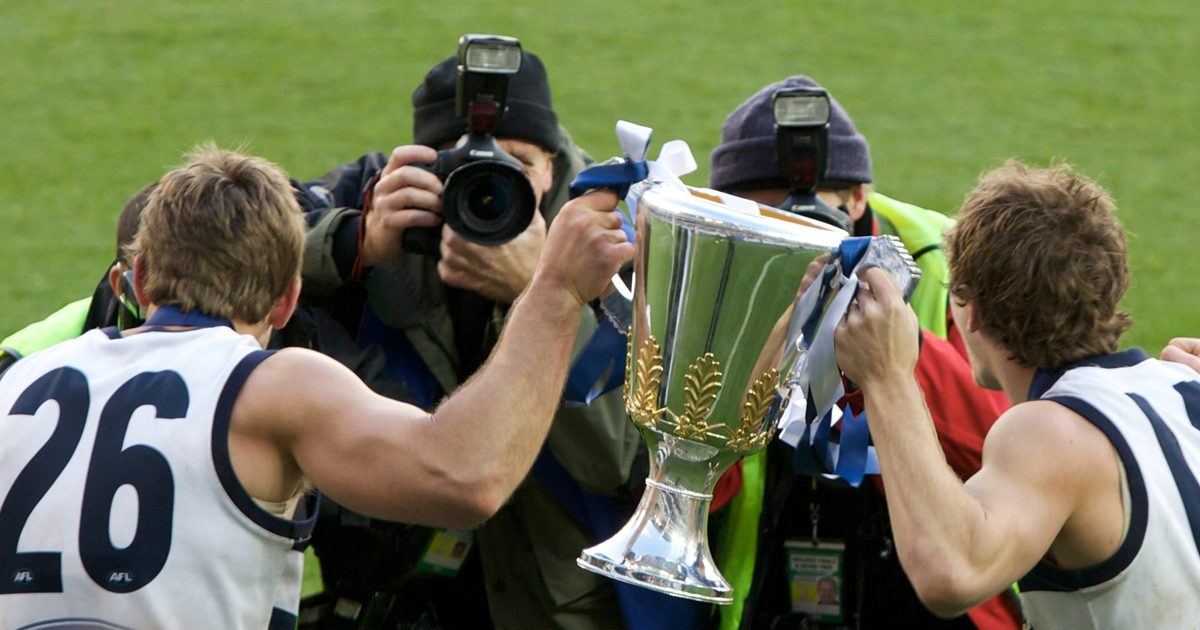
Photo: Paul Coster, CC BY 2.0 https://creativecommons.org/licenses/by/2.0, via Wikimedia Commons.
Sources
- The Guardian. Geelong forced to scrap secret deal with AFL player with history of concussion. 6 August 2026. https://www.theguardian.com/sport/2026/aug/06/afl-geelong-alleged-concussion-deal-with-player
- Fox Sports. AFL's penalty call as 'secret' Cats concussion deal scrapped. 2026. https://www.foxsports.com.au
- Sport and Recreation Alliance. UK Concussion Guidelines for Grassroots Sport (November 2024 update). https://sportandrecreation.org.uk/files/uk-concussion-guidelines-for-grassroots-non-elite-sport---november-2024-update-061124084139.pdf
- Department for Education. Keeping Children Safe in Education 2024. https://www.gov.uk/government/publications/keeping-children-safe-in-education--2
- Health and Safety at Work etc. Act 1974. https://www.legislation.gov.uk/ukpga/1974/37/contents
The Geelong case is a live example of what happens when organisations treat concussion liability as a paperwork problem rather than a welfare one. The Luca Safe Concussion Framework gives schools and clubs the documented governance structure that demonstrates genuine duty of care, not the appearance of it. Download the framework free at /lscf/.